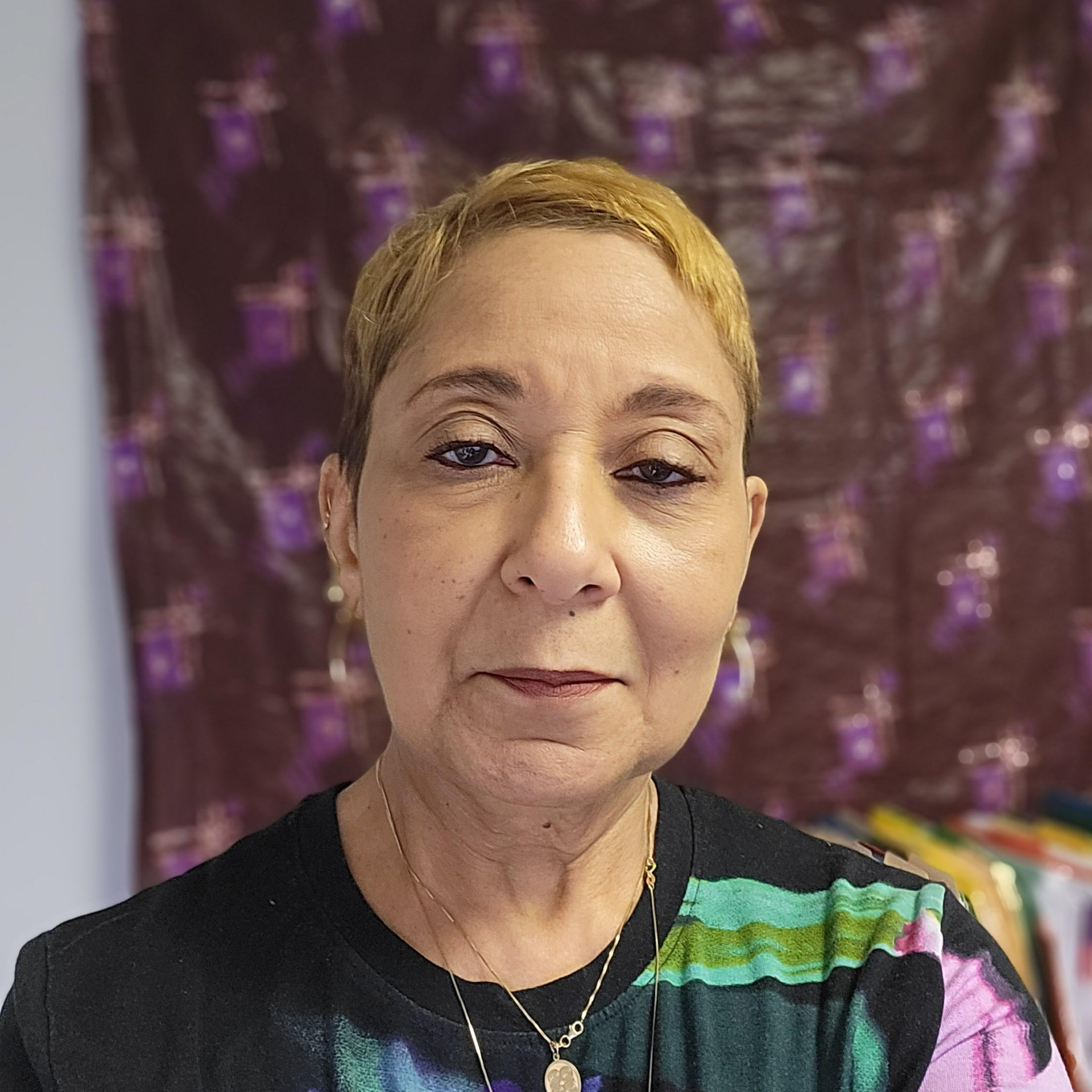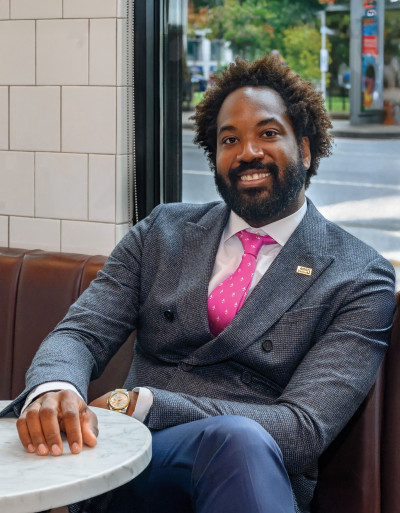
Dafina Ward, JD, is the outgoing Executive Director of the Southern AIDS Coalition (SAC), where she leads efforts to address HIV-related disparities across the Southern United States. SAC founded Southern HIV/AIDS Awareness Day (SHAAD) in 2019 to bring national attention to the region’s disproportionate HIV burden An attorney with a background in nonprofit leadership and health equity, Ward’s work focuses on expanding access to care, advancing policy change, and supporting communities most affected by HIV across the South.
Q: What inspired you to pursue this work and eventually take a leadership role at the Southern AIDS Coalition? What experiences led to the founding of SHAAD in 2019?
My work in HIV wasn’t something I initially sought out. In 2007, while practicing law in Alabama, I wanted to do something more community-oriented. An opportunity came along to support HIV prevention funding, matching national foundation dollars with locally cultivated resources.
But my first experience with HIV advocacy actually happened earlier, during law school, when I clerked at the Southern Poverty Law Center. One of the cases I worked on was a class action lawsuit on behalf of people incarcerated in a rural county jail—including a man living with HIV who wasn’t being provided his medication. I thought it was just a one-off case in my legal journey, but it became the heart of my professional work.
I went on to work at AIDS Alabama, leading prevention and outreach efforts, and later transitioned my work to focus on abortion access. There were so many intersections in that work, which eventually led me to join SAC in 2017 to reconnect with community through grantmaking and capacity building. In 2020, I stepped into the role of Executive Director—something I hadn’t planned, but which was clearly a calling.
SHAAD itself was the brainchild of my predecessor, Nicholas Carlisle, and former policy director, Aquarius Gilmer. They recognized the need for an awareness day focused on the South—one that could amplify the voices of southerners living with HIV and marginalized communities impacted by HIV, while also calling for solutions, not just naming problems. The first theme in 2019 was Southern Solutions, and we’ve continued to make it a day powered by community ownership across the region. Our small team was wholly committed to making SHAAD a success—Marvin Anderson, Gina Brown, and Mardrequs Harris—all of us worked to bring this important day to life!
Q: AIDSVu reports that in 2022, Black individuals made up nearly half of new HIV diagnoses in the South, but as of 2023 represented only 22% of Southern PrEP users. How is SHAAD addressing these inequities, and what are your goals for closing these gaps?
Unfortunately, the disparities in PrEP access for Black Southerners mirror other inequities in healthcare. Addressing this is about more than HIV—it’s about health justice.
Last year, SAC released a report in partnership with PrEP4All, highlighting challenges to PrEP access in the South. Bad policy barriers, lack of awareness, and personal biases all play a role—particularly along lines of race and class. SAC is pushing for policy change to make PrEP more affordable and accessible, including allowing pharmacists to provide both pre- and post-exposure prophylaxis, especially in areas with few healthcare providers.
With threats to Medicaid and cuts to a range of public health resources, corporate entities, including insurance companies and corporations, must commit to policies that expand access and availability of PrEP. We have to normalize PrEP conversations in all communities—not just among LGBTQ+ people, but also among cisgender women and others who may not see themselves as “eligible.”
For SHAAD 2025, the focus is on health justice as a whole, with cross-movement collaboration to ensure prevention resources—like PrEP—are always part of the toolkit for sustaining community health.
Q: What role do storytelling, community partnerships, and cultural leadership play in raising awareness and combating stigma?
Storytelling is essential. Data is important, but it’s often not enough to move policymakers or the public. Personal stories make the impact of policies—and their failures—real.
For example, during AIDS Watch last year, SAC’s policy director, Will Ramirez, met with a Mississippi lawmaker alongside a woman living with HIV whose rent hadn’t been paid through the HOPWA program. Her firsthand account of what eviction would mean for her health and family moved that lawmaker to act immediately—something statistics alone couldn’t have accomplished.
Storytelling also combats stigma by showing people they are not alone. Stigma thrives in isolation, but when people hear from others who are thriving—whether living with HIV or using PrEP—they see themselves reflected and feel supported. As we approach a challenging political climate and threats to public health infrastructure, these shared stories will be more vital than ever.
Q: SHAAD 2025 is taking place during a time of great uncertainty for the HIV community. What is your message for this year?
This year’s theme is S.T.E.P. in Solidarity—Southern Trailblazers Empowering Progress. It’s about revisiting our region’s long legacy of resistance and resilience. We’ve faced immense challenges before and met them head-on.
What we are seeing happen in front of our eyes—the dismantling of systems and attacks on our most vulnerable communities requires a multi-pronged response. Solidarity means cross-movement, cross-sector advocacy—recognizing that no movement should stand alone. It also means being engaged locally, not just focusing on federal policy. For those outside the South, it’s about finding ways to send resources and support where they’re most needed.
Finally, I remind my colleagues to balance resistance with rest. This is long-game advocacy. We must care for ourselves, lean on our communities, and step back in when we’re ready to keep fighting.
Q: Last year SAC released an updated Southern States Manifesto. Why is it significant today?
The first Manifesto was published over 20 years ago as a call to action to address HIV disparities in the South. The 2024 update includes personal stories and historical context to remind us that, while we’ve built a lot, there’s still much work ahead. It lays out policy priorities, shares stories of ongoing advocacy, and highlights our region’s history of resistance.
I encourage advocates to use it as a tool to push for equity and ensure every Southerner has the resources they need to live healthy, thriving lives.