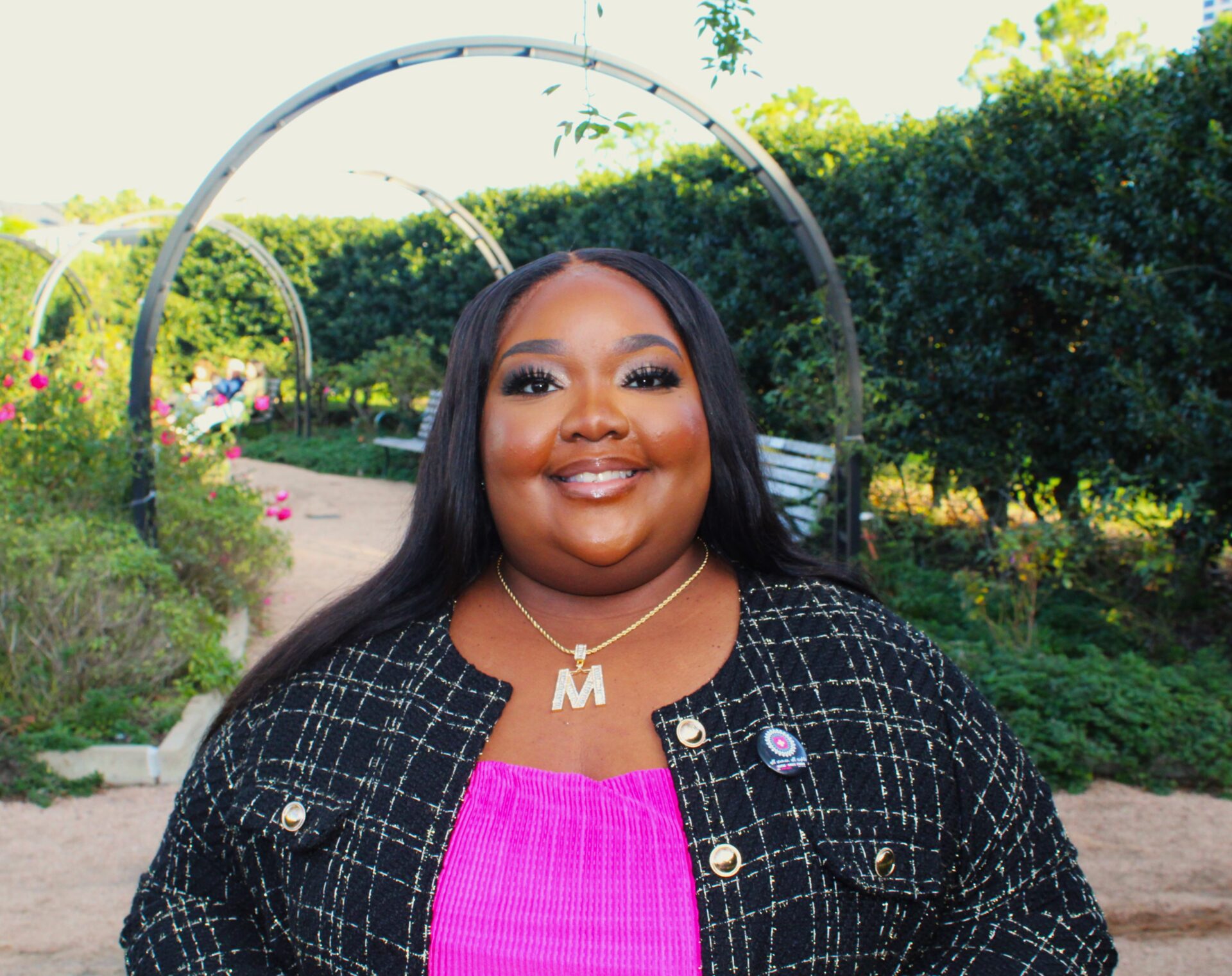
Marnina Miller is the co-executive director of Positive Women’s Network–USA, a national organization led by and for women and gender-diverse people living with HIV. A passionate human rights activist and strategist, she brings her lived experience as a Black woman living with HIV to her leadership, focusing on dismantling stigma, advancing gender and racial justice, and ensuring women living with HIV are centered as decision-makers in policy, funding, and program design.
Q: Positive Women’s Network (PWN) has a long history of leadership by women living with HIV. How has being a woman living with HIV yourself shaped the way you think about power, advocacy, and what women need from the HIV response today?
A: Living with HIV has reshaped how I understand power by making visible what is usually invisible. As women living with HIV, our health is not just about our bodies — it’s tethered to systems such as insurance regulations, state budgets, and federal appropriations, to name a few. A decision made hundreds of miles away can determine whether your medication is accessible.
During my time as a PWN Policy Fellow, I learned that health is political. Structural violence consistently fails the same communities — Medicaid redetermination pushing women off coverage over paperwork errors, states refusing expansion and leaving people in coverage gaps, chronically underfunded public health departments. The “herstory” of PWN was born from that resolve. Women living with HIV recognized early that policy decisions were shaping their survival. We were navigating stigma in medical spaces, criminalization laws, custody battles where our diagnoses were weaponized, and funding decisions that overlooked our lived realities.
Our sister-ancestors didn’t just respond to that — they built something: an organization led by women living with HIV, not as a symbol, but as a necessity. Our mission is clear: to prepare and involve women and gender-diverse people living with HIV in all levels of policy and decision-making — testifying before legislatures, serving on advisory councils, leading organizing efforts, and shaping funding priorities.
Q: PWN is known for centering gender justice, racial justice, and economic justice in its HIV work. When you look at the current policy landscape, what are the top one or two fights you feel women living with HIV cannot afford to lose in the next few years?
A: There are two fights that women living with HIV cannot afford to lose. The first is protecting the public health safety net — defending Medicaid and fully funding and protecting the Ryan White HIV/AIDS Program and the AIDS Drug Assistance Program. Treatment is not optional for people living with HIV; it is lifelong.
The second is the fight against HIV criminalization. When the law treats our bodies like liabilities, it fuels stigma, discourages disclosure, and undermines trust in health systems. HIV criminalization has never improved public health outcomes — it actively undermines them. People disengage from care. Trust erodes. Disclosure becomes dangerous and testing is delayed.
Q: Criminalization, stigma, and gender-based violence all intersect with HIV for many women and femmes. From your vantage point, what are the most harmful misconceptions about women living with HIV that you wish policymakers, providers, or the public would finally let go of?
A: One of the most harmful misconceptions is that as long as women living with HIV are on treatment, the job is done. Yes, medication is critical. Viral suppression helps people living with HIV live longer. But reducing the HIV response to whether someone is taking medication flattens the complexity of our lives and ignores the conditions that make sustained health possible.
The HIV sector has historically measured success in biomedical terms – undetectable viral loads, retention in care. Those metrics matter, but they only tell us whether someone is surviving. They do not tell us whether someone is living well.
We need quality-of-life measures embedded into the HIV response — housing stability, freedom from violence, mental health, economic security, bodily autonomy, community connection. When policymakers and providers assume treatment alone is enough, they ignore the structural barriers that women living with HIV navigate every day. They treat HIV as an isolated medical condition instead of a condition shaped by gender inequality, racism, poverty, and stigma. Medication is necessary, but insufficient on its own.
I also want us to stop glamorizing resilience. Living with HIV is not a privilege. It is not a blessing. It is a chronic illness. The goal is a world where care is stable, stigma is dismantled, violence is addressed, and women living with HIV can live long, healthy, dignified lives.
Q: Much of PWN’s work happens in coalition. What does a truly effective cross movement partnership look like to you, and can you point to an example where that kind of collaboration made a concrete difference?
A: A truly effective cross-movement partnership does not just bring organizations together — it aligns strategy, analysis, and power so that the needs of our communities actually shape policy outcomes. For women living with HIV, the conditions that shape our health intersect with broader fights for racial justice, gender justice, and reproductive freedom. When movements recognize that our struggles are interconnected, they amplify each other’s power instead of fragmenting it.
One of the strongest examples is the Health Not Prisons Collective (HNP), a national coalition co-founded by Positive Women’s Network–USA, The Sero Project, Transgender Law Center, Counter Narrative Project, and the U.S. Caucus of People Living with HIV. What makes HNP different is that it does not treat HIV criminalization as a niche issue. It situates within the broader framework of mass incarceration, policing, and structural violence. On February 28, 2026, members of Congress introduced a resolution recognizing HIV Is Not a Crime Awareness Day, affirming that HIV criminalization laws are outdated, harmful, and inconsistent with science and human rights. That resolution did not emerge overnight. It was the result of years of coordinated advocacy, education, and coalition building. That is what real partnership looks like: shared strategy, shared risk, and shared victories. It means community voices are not just present at the table — they help build it.
Q: As you look ahead in your role as co-executive director, what is one bold change you would like to see in how the HIV sector engages women living with HIV?
A: I want the HIV sector to stop confusing inclusion with power, and I want to see a fundamental shift from engagement to liberation.
The HIV sector has gotten comfortable using the phrase “center lived experience,” but that is not enough. I want to see women and gender-diverse people living with HIV move from advisory roles to governing roles; from storytellers to decision-makers; from being consulted to controlling resources. That means serving as principal investigators, leading agencies and organizations, setting funding priorities, defining research agendas, writing policy, and holding budget authority.
We should not have to fight every budget cycle to defend our right to care. We should not have to prove our expertise to decision-makers who rely on our lived realities but hesitate to trust our leadership. Ultimately, what I want for myself and my people is liberation — from stigma, from criminalization, from systems that control our health outcomes, from policy environments that treat our bodies as negotiable. That is the future I am working toward.