
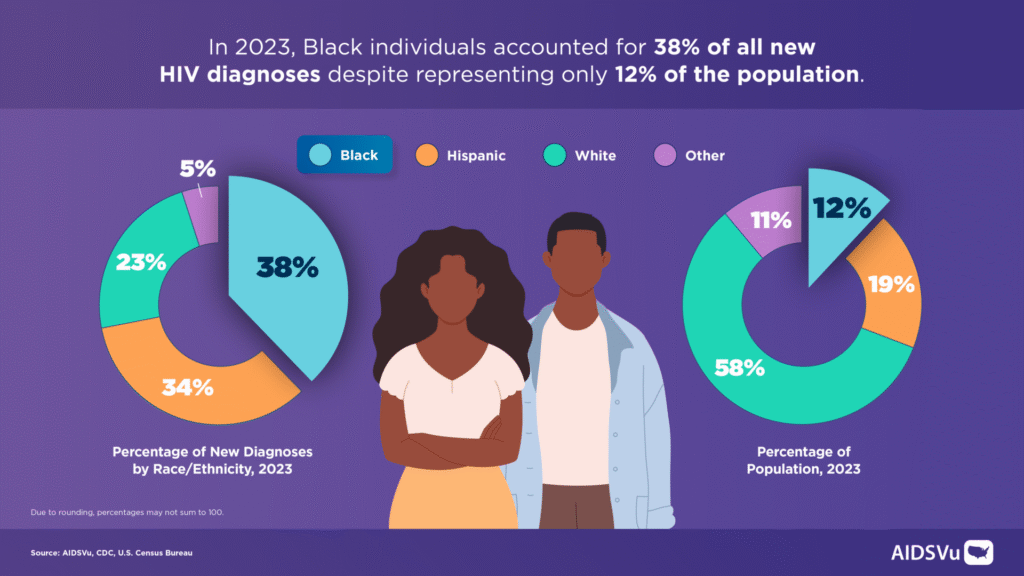
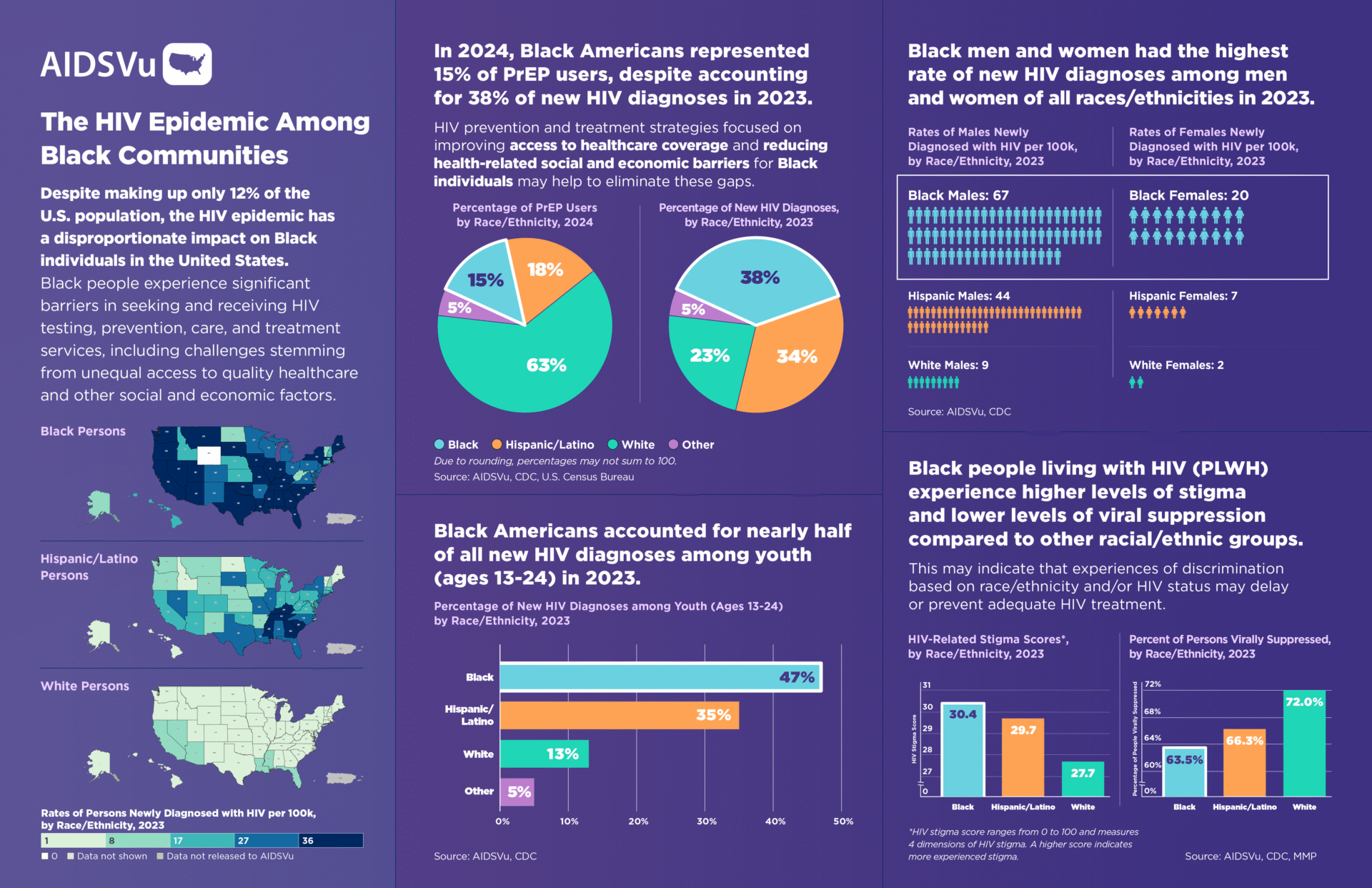
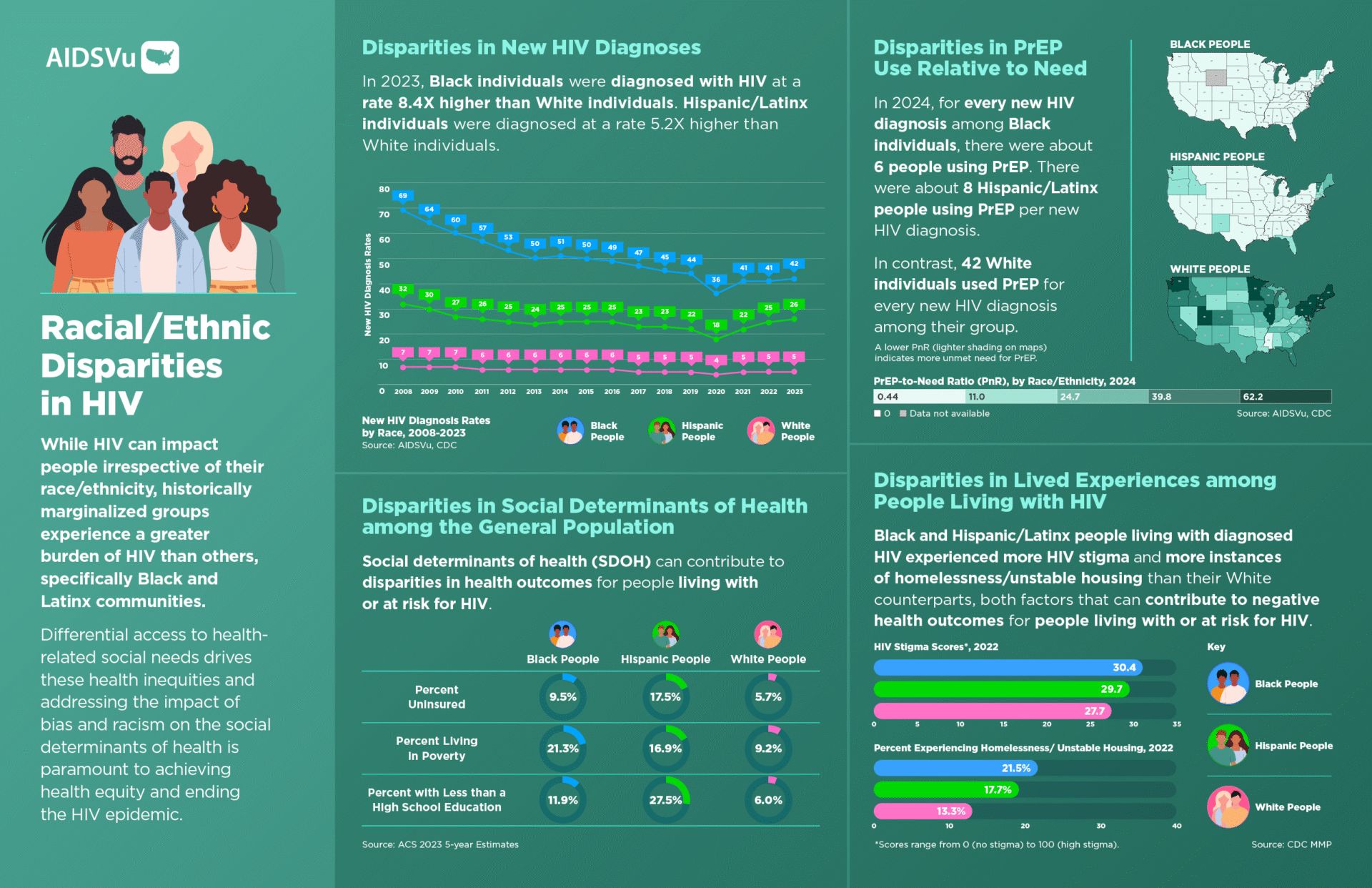
February 7 is National Black HIV/AIDS Awareness Day, which recognizes the disproportionate impact of the HIV/AIDS epidemic on Black communities and individuals across the U.S. Black people accounted for 39% of people living with HIV (PLWH) and 38% of new HIV diagnoses in the U.S. in 2023, despite only representing 12% of the U.S. population. Black men had the highest rate of new HIV diagnoses among men of all races/ethnicities in 2023. Similarly, Black women had the highest rate of new HIV diagnoses among women of all races/ethnicities in 2023. Additionally, young Black people accounted for almost half of all new HIV diagnoses among youth in 2023.
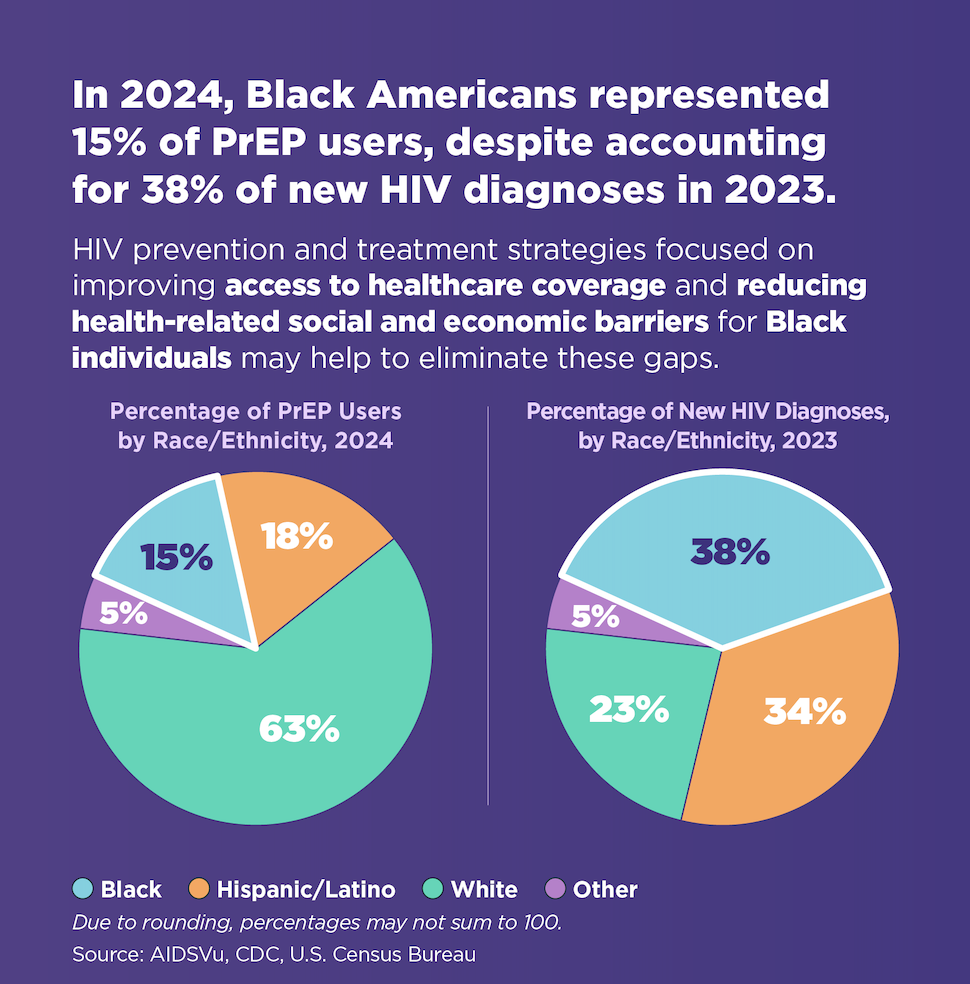
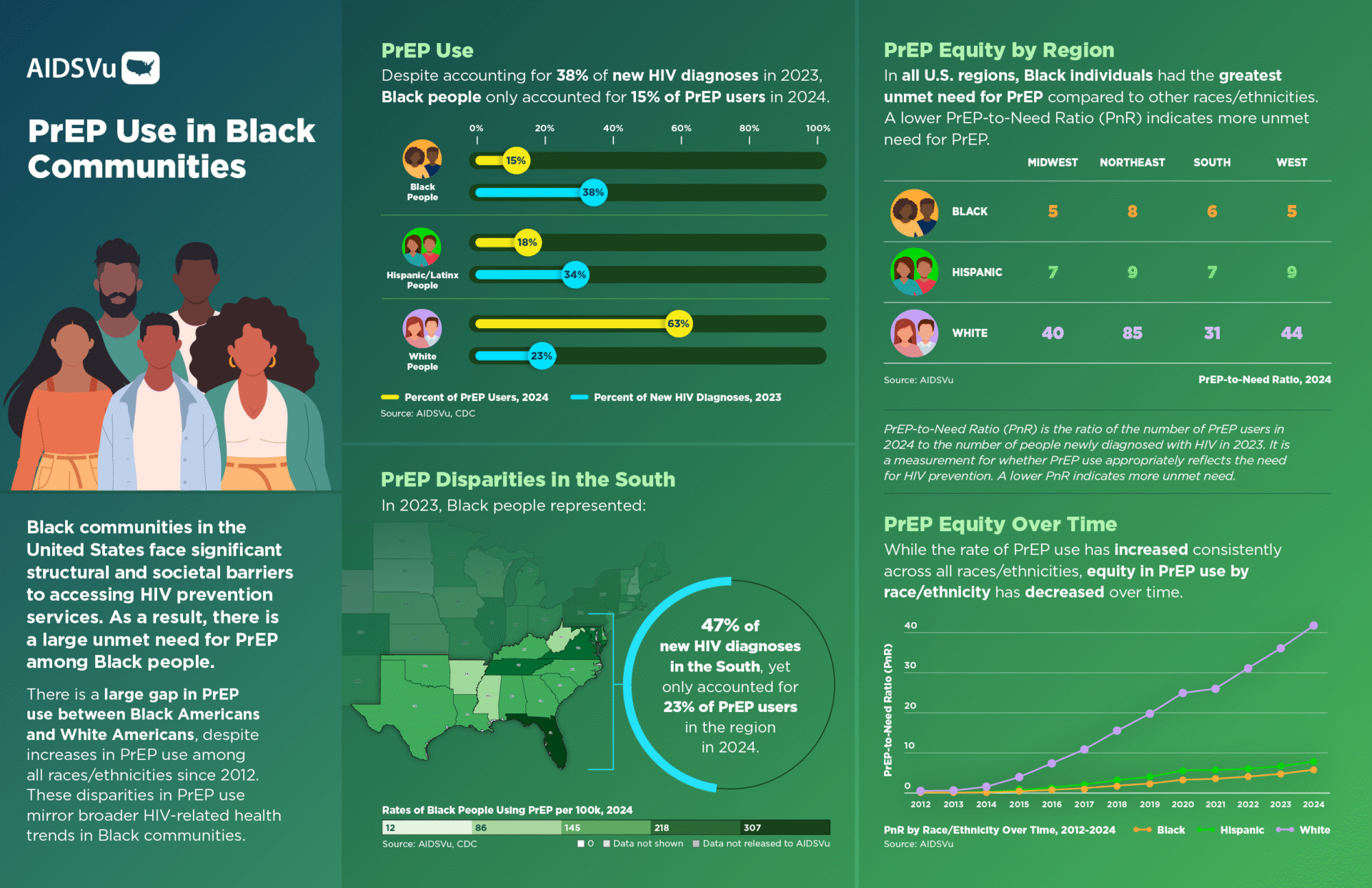
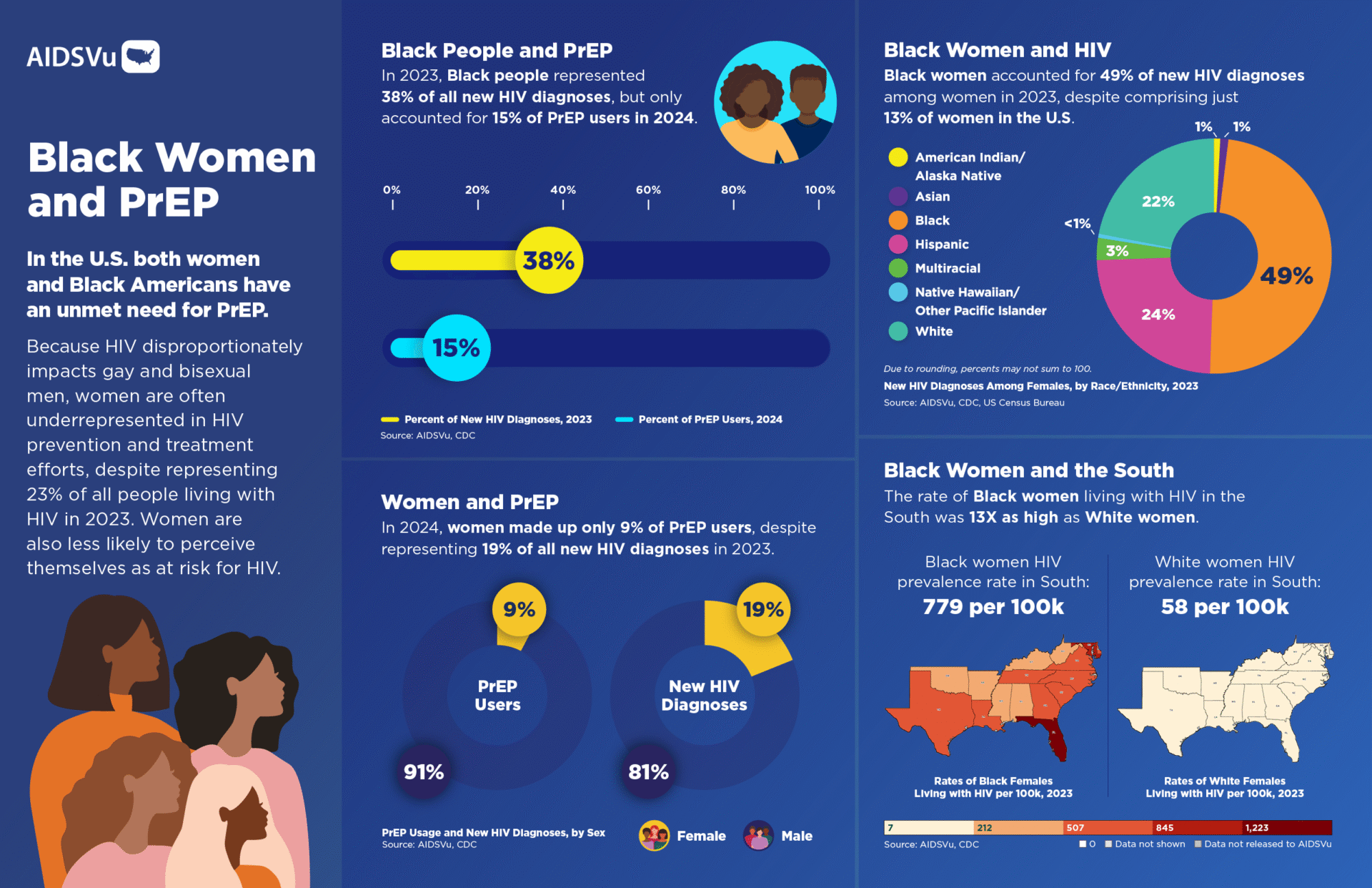
Despite representing the highest percentage of PLWH and number of new diagnoses among all races/ethnicities, Black people accounted for the lowest percentage (15%) of PrEP users in 2024. Black people also have the lowest PrEP-to-Need Ratio (PnR), meaning that they experience the greatest unmet need for PrEP.
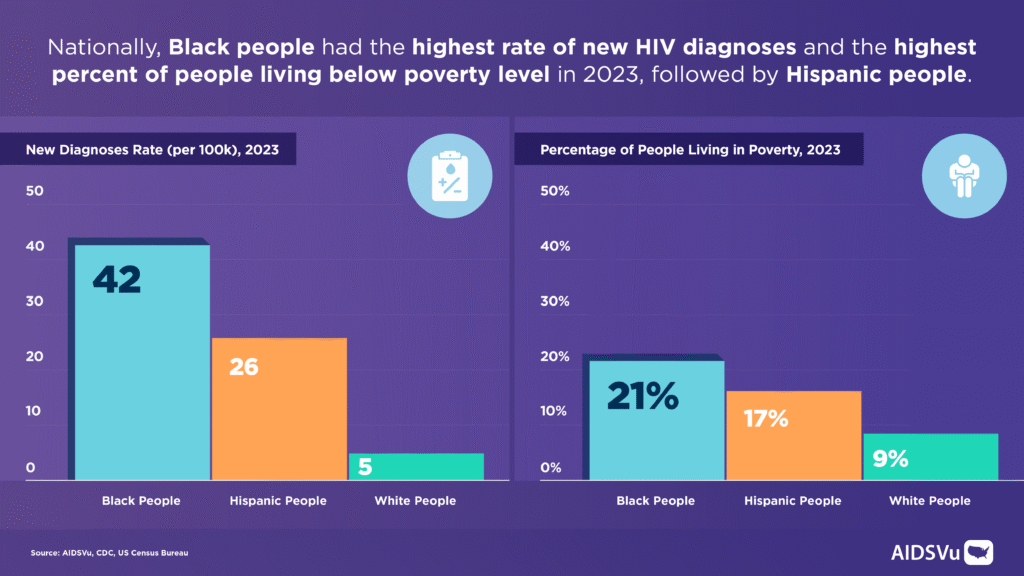
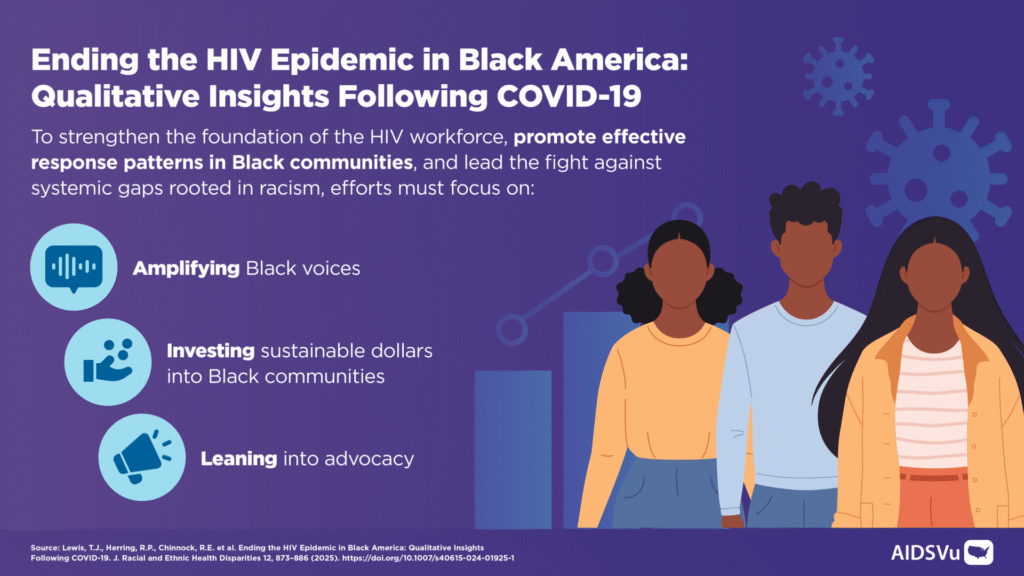
Social determinants of health (SDOH) play a significant role in shaping the impact of the HIV epidemic on Black communities. In 2023, Black people living with HIV (PLWH) experienced higher levels of HIV-related stigma than any other racial or ethnic group. That same year, 21% of Black PLWH in the U.S. lived in poverty and 23% experienced food insecurity—the highest rates across all racial and ethnic groups. Addressing these gaps requires amplifying Black voices, investing sustained resources in Black communities, and strengthening advocacy efforts to support more effective HIV responses.
On National Black HIV/AIDS Awareness Day, we recognize that now, more than ever, data is essential to understanding and ending the HIV epidemic. Access to this data allows researchers, advocates, and the public to understand how HIV/AIDS impacts the communities that they hold near and dear. At AIDSVu, we will continue to provide data that makes progress towards ending the HIV epidemic possible.
“Our role is to make sure there’s a transparent view, and to just keep shining that light,” said AIDSVu Principal Scientist and Emory University Professor Patrick Sullivan.
Explore our Resources
AIDSVu’s infographics encourage new ways of visualizing the HIV epidemic among Black communities. Share them on socials and add them to your presentations.
The HIV Epidemic Among Black Communities
Racial/Ethnic Disparities and HIV
PrEP Use in Black Communities
Black Women and PrEP
Update your LinkedIn, Facebook, and X banners to show your support for #NBHAAD.
Facebook/LinkedIn
Twitter/X
Facebook/LinkedIn
Twitter/X





Share these social media posts and infographics on LinkedIn, X, and Facebook with #NBHAAD to help spark conversations about HIV among Black communities.
LinkedIn Post 1
February 7 marks National Black HIV/AIDS Awareness Day, a moment to recognize the continued, disproportionate impact of HIV on Black communities across the U.S.
In 2023, Black people accounted for 38% of new HIV diagnoses and 39% of people living with HIV, despite representing just 12% of the U.S. population. Among adolescents and young adults, nearly half of all new diagnoses occurred in Black individuals, underscoring the urgency of sustained, focused action.
This #NBHAAD, explore data and shareable resources that help deepen understanding and support progress:
https://aidsvu.org/resources/deeper-look-hiv-in-black-communities/
LinkedIn Post 2
#PrEP remains one of the most effective tools for preventing #HIV—but access is not the same among all racial/ethnic groups.
Despite bearing the highest burden of HIV, Black people represented just 15% of PrEP users in 2024 and continue to have the lowest PrEP-to-Need Ratio, signaling the greatest unmet prevention need of any racial or ethnic group.
National Black HIV/AIDS Awareness Day is a reminder that closing prevention gaps requires removing structural barriers, investing in communities, and expanding access to care.
Learn more:
https://aidsvu.org/resources/deeper-look-hiv-in-black-communities/
LinkedIn Post 3
Black communities continue to experience a disproportionate burden of #HIV driven by gaps in care and social determinants of health.
In 2023, Black men and Black women had the highest rates of new HIV diagnoses among men and women of all races and ethnicities. That same year, Black people living with HIV experienced the highest levels of HIV-related stigma, alongside elevated rates of poverty and food insecurity.
This #NBHAAD, let’s continue to advocate for data-driven, community-centered solutions.
https://aidsvu.org/resources/deeper-look-hiv-in-black-communities/
LinkedIn Post 4
#DYK? In 2023, Black men and Black women experienced the highest rates of new HIV diagnoses among all races and ethnicities, and young Black people accounted for nearly half of new diagnoses among youth.
On National Black HIV/AIDS Awareness Day, we recognize the importance of amplifying Black voices, strengthening advocacy, and ensuring access to prevention, care, and treatment. Learn more:
https://aidsvu.org/resources/deeper-look-hiv-in-black-communities/
#NBHAAD
Twitter/X Post 1
February 7 is National Black HIV/AIDS Awareness Day. In 2023, Black people accounted for 38% of new HIV diagnoses and nearly half of diagnoses among youth, despite making up just 12% of the U.S. population. Data drives action.
Learn more: https://aidsvu.org/resources/toolkits/national-black-hiv-aids-awareness-day-toolkit-2026/
#NBHAAD
Twitter/X Post 2
#PrEP saves lives, but gaps in access persist. In 2024, Black people accounted for just 15% of PrEP users and had the lowest PrEP-to-Need Ratio, signaling the greatest unmet prevention need. Learn more:
https://aidsvu.org/resources/deeper-look-hiv-in-black-communities/
#NBHAAD
Twitter/X Post 3
In 2023, Black men and women experienced the highest rates of new #HIV diagnoses among all races/ethnicities, driven by stigma and structural inequities. This #NBHAAD, let’s push for sustained and focused solutions.
https://aidsvu.org/resources/toolkits/national-black-hiv-aids-awareness-day-toolkit-2026/
Twitter/X Post 4
#DYK? Nearly half of new HIV diagnoses among youth in 2023 occurred among young Black people. Ending the epidemic requires investing in communities and expanding access to prevention and care. Learn more:
https://aidsvu.org/resources/deeper-look-hiv-in-black-communities/
#NBHAAD