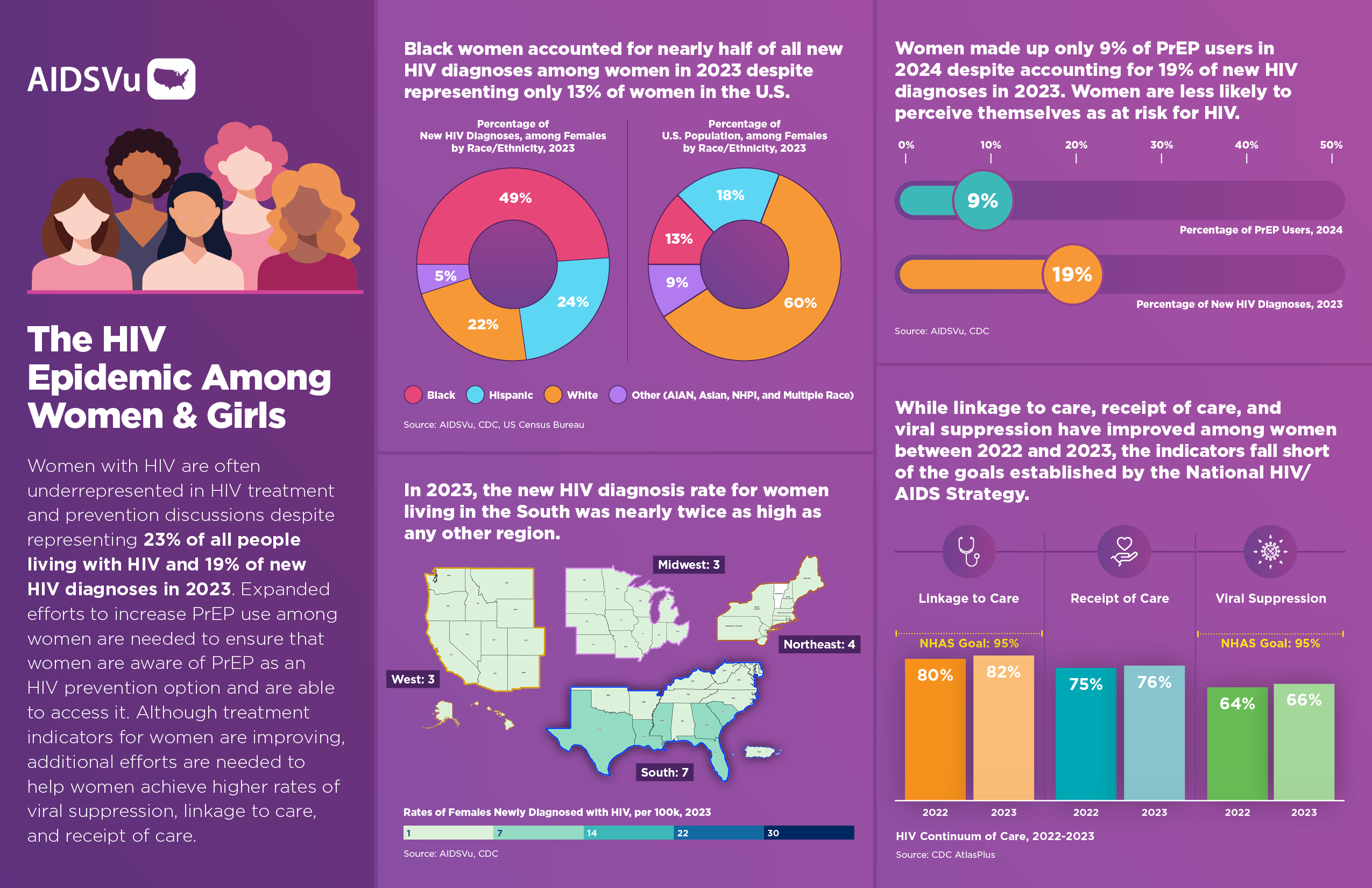
March 10, 2026 is National Women and Girls HIV/AIDS Awareness Day (NWGHAAD). Women living with HIV are often underrepresented in conversations about HIV, despite accounting for 19% of new HIV diagnoses in 2023.
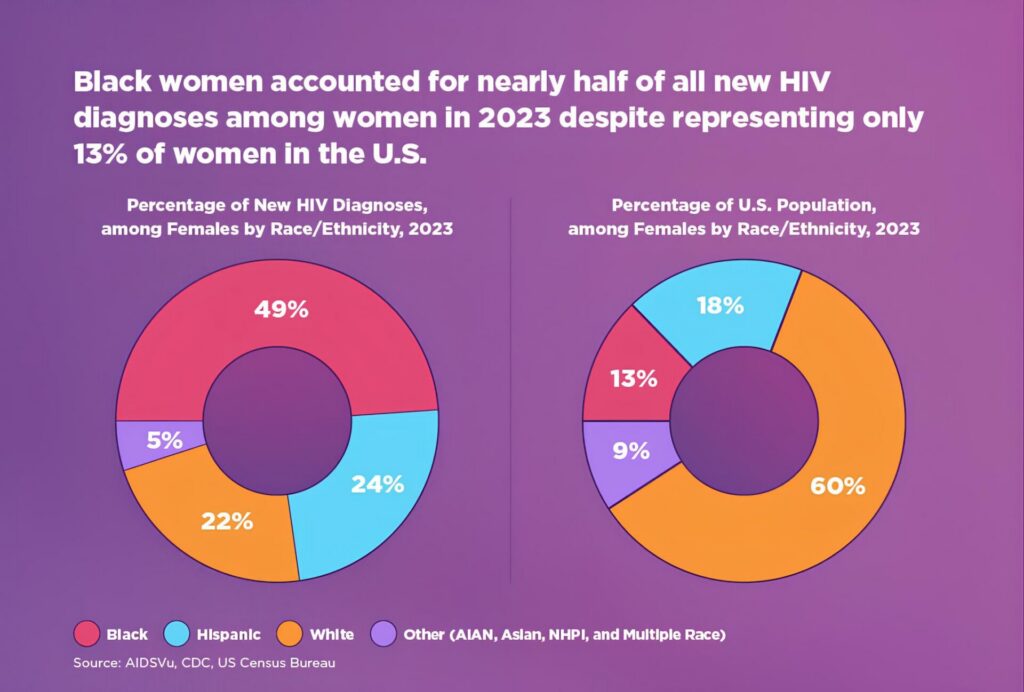
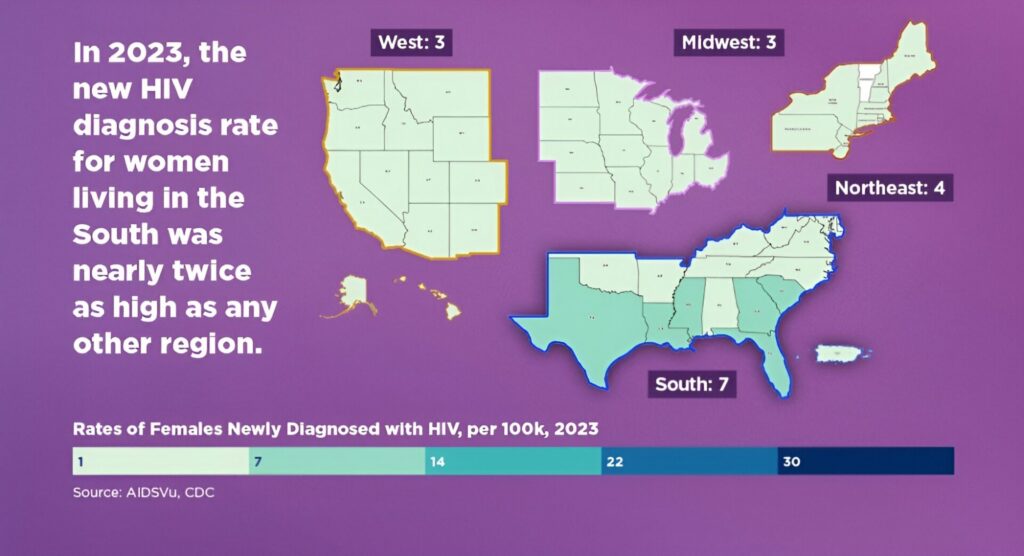
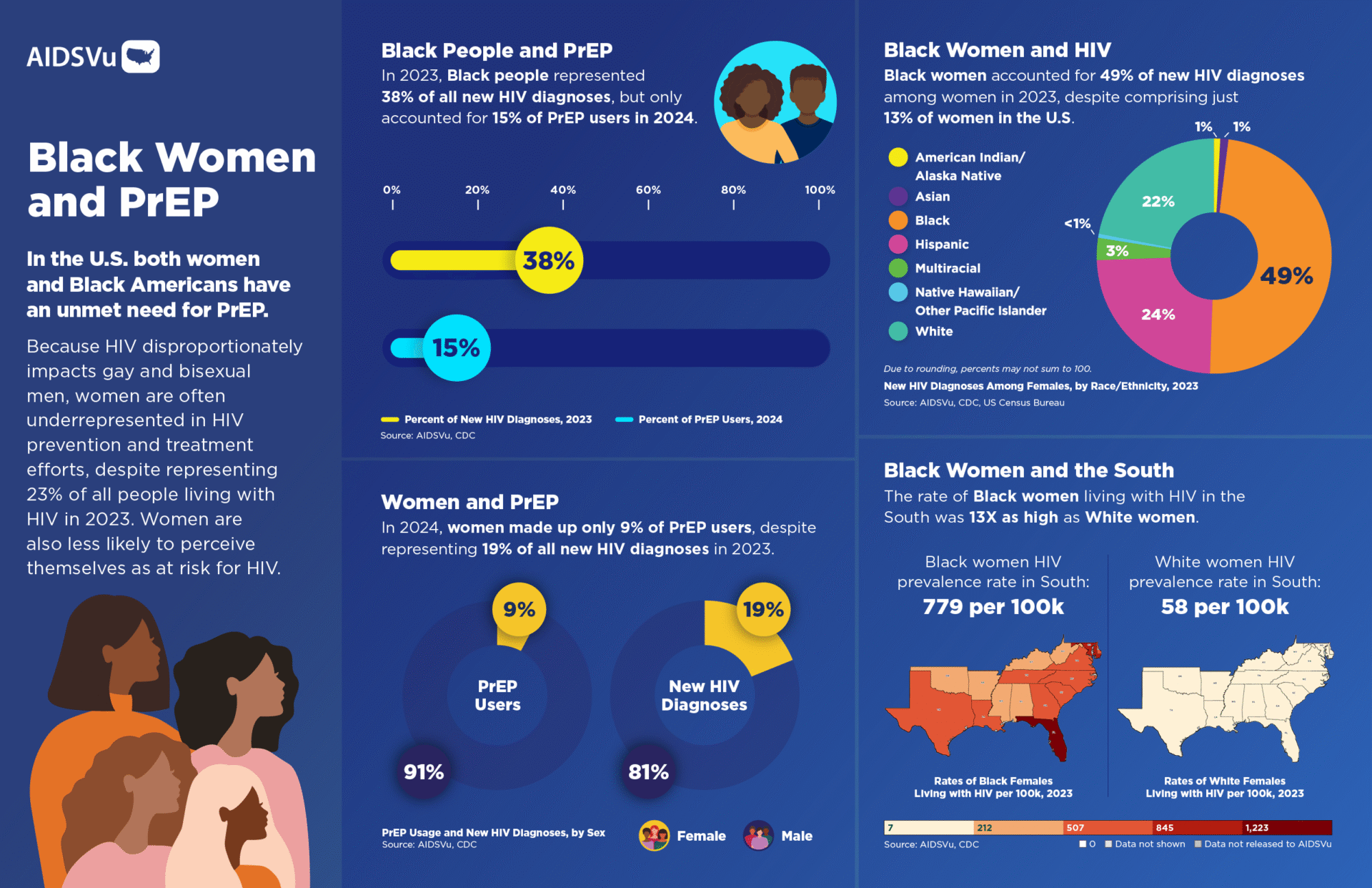
Black women are particularly impacted by HIV, representing nearly half of all new HIV diagnoses among women but only 13% of all women in 2023. The HIV epidemic also has a disproportionate impact on women in certain parts of the country; in 2023, new HIV diagnoses rates among women in the South were nearly twice as high as those in other regions of the U.S.
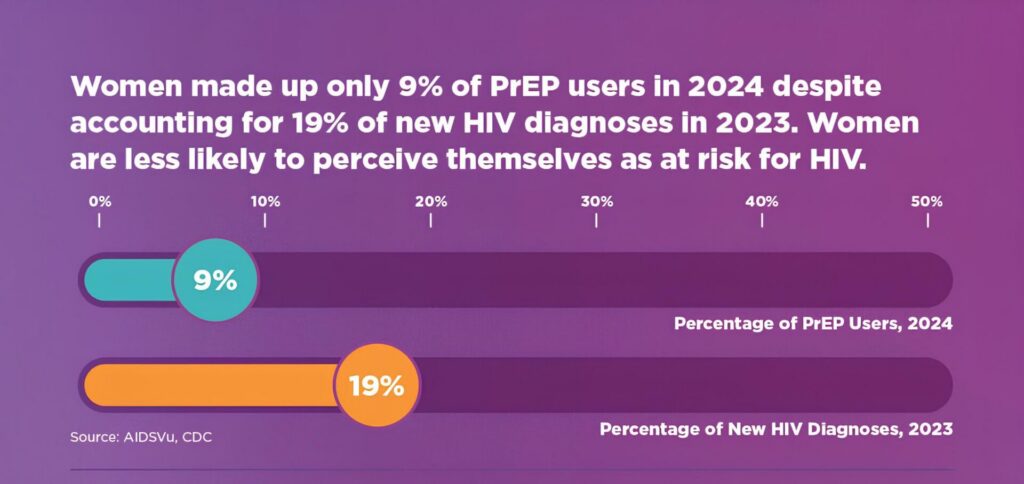
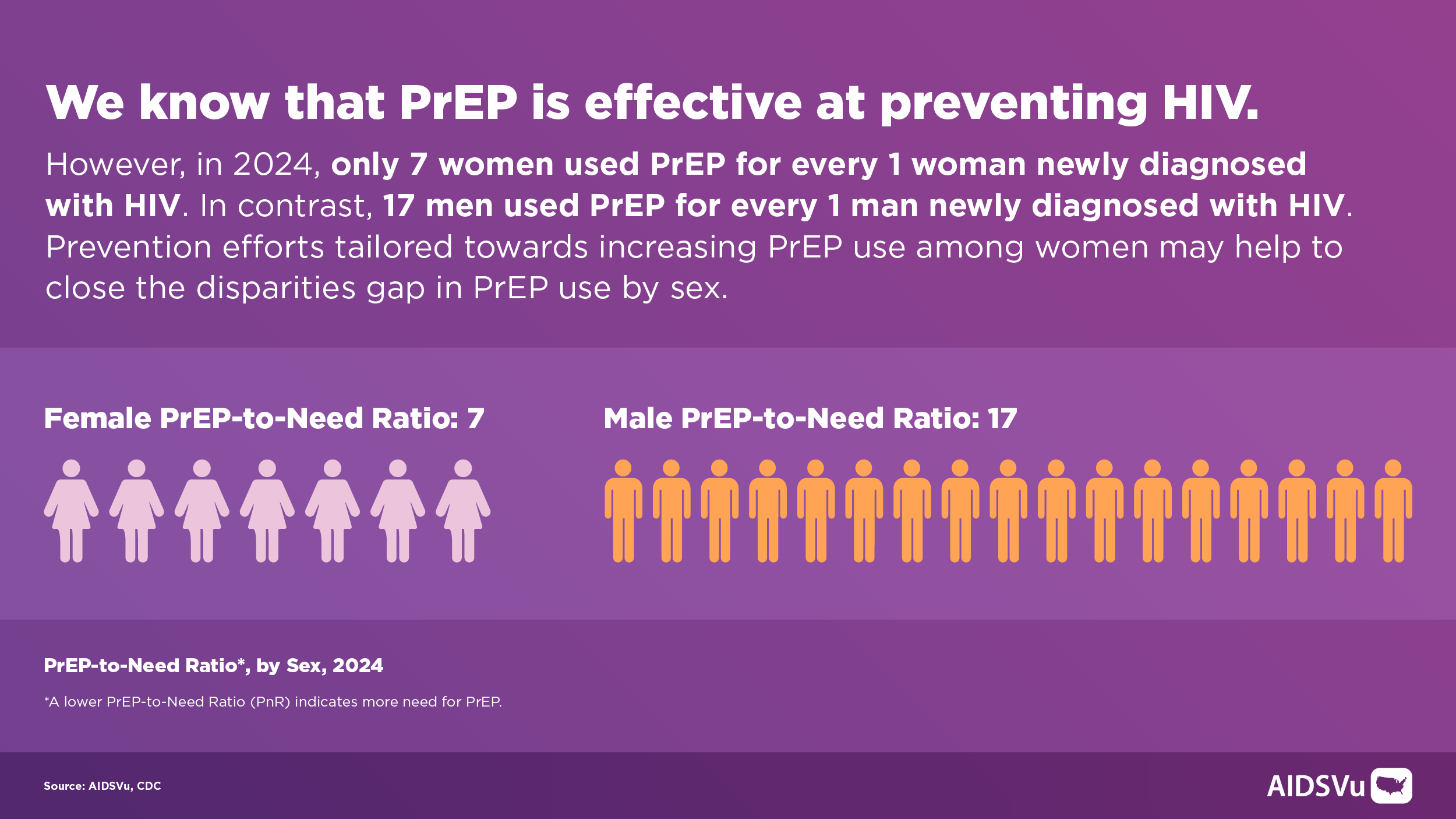
Despite women accounting for about 1/5 of new HIV diagnoses in 2023, women only comprised 9% of PrEP users in 2024, demonstrating a significant unmet need for PrEP. This NWGHAAD, we recognize the importance of connecting women to HIV prevention, testing, treatment, and care as we continue to make progress towards ending the HIV epidemic.
Explore our Resources
AIDSVu’s infographics encourage new ways of visualizing the HIV epidemic among women and girls. Share them on socials, print them out as one-pagers, and add them to your presentations.
The HIV Epidemic Among Women & Girls
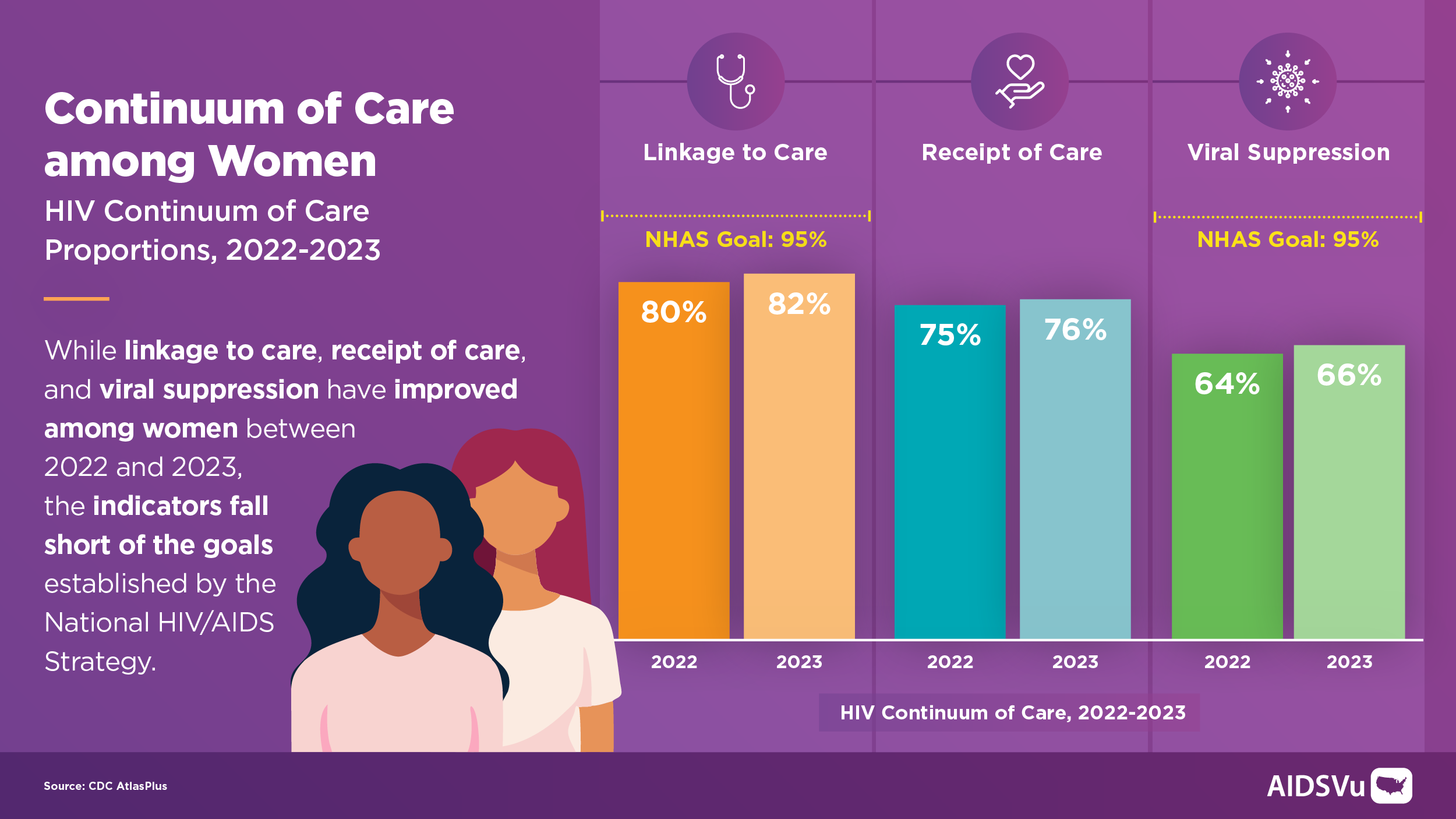
Continuum of Care and Women
Women and PrEP
Black Women and PrEP
Update your LinkedIn, Facebook, and X banners to show your support for #NWGHAAD.
Facebook/X
Facebook/LinkedIn
Facebook/X
Facebook/LinkedIn


Share these social media posts and infographics on LinkedIn, X, and Facebook with #NWGHAAD to help spark conversations about HIV among women.
LinkedIn Post 1
March 10 marks the 20th National Women and Girls HIV/AIDS Awareness Day (#NWGHAAD).
Women accounted for 19% of new HIV diagnoses in 2023 but only 9% of PrEP users in 2024, highlighting a persistent gap in HIV prevention.
This NWGHAAD, we recognize the importance of connecting women to prevention, testing, treatment, and care at every stage of life.
Explore resources and share the toolkit: https://aidsvu.org/national-women-and-girls-hiv-aids-awareness-day-toolkit-2026/
LinkedIn Post 2
In 2023, Black women represented nearly half of new HIV diagnoses among women, despite accounting for only 13% of the U.S. female population. New diagnosis rates among women in the South were also nearly twice as high as in other U.S. regions.
This #NWGHAAD, we reaffirm the need for equitable access to HIV prevention, testing, treatment, and care for women and girls nationwide.
Access the 2026 toolkit: https://aidsvu.org/national-women-and-girls-hiv-aids-awareness-day-toolkit-2026/
LinkedIn Post 3
Progress in the HIV response must include women and girls.
Despite representing about 1 in 5 new HIV diagnoses, women comprised only 9% of PrEP users in 2024, signaling continued unmet prevention needs.
On March 10, join us in recognizing #NWGHAAD and amplifying resources that support prevention, care, and long-term health for women affected by HIV.
Explore infographics, partner resources, and more: https://aidsvu.org/resources/deeper-look-hiv-among-women/
Twitter/X Post 1
March 10 marks the 20th #NWGHAAD. Women account for 19% of new HIV diagnoses but only 9% of PrEP users, revealing a persistent prevention gap.
Explore resources & take action: https://aidsvu.org/resources/deeper-look-hiv-among-women/
Twitter/X Post 2
Black women represent nearly half of new HIV diagnoses among women but only 13% of the U.S. female population.
This #NWGHAAD, expanding access to prevention, testing, and care for women and girls is essential. https://aidsvu.org/resources/deeper-look-hiv-among-women/
Twitter/X Post 2
Women represent ~1 in 5 new HIV diagnoses, yet just 9% of PrEP users.
On March 10, join us in recognizing #NWGHAAD and advancing HIV prevention, treatment, and care for women nationwide. Learn more: https://aidsvu.org/resources/deeper-look-hiv-among-women/