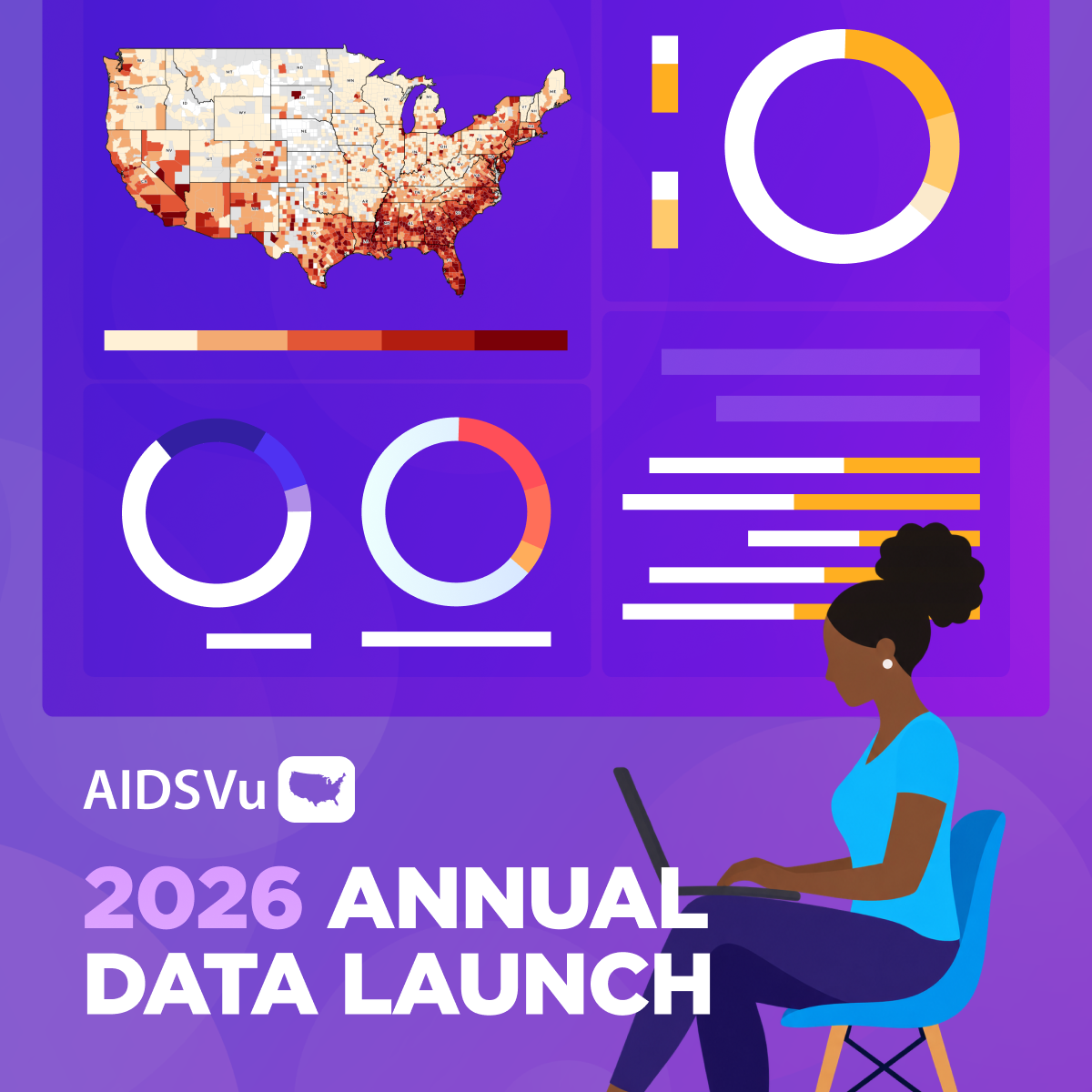
In 2013, the UNAIDS Programme Coordinating Board set an ambitious goal of ending the global HIV epidemic by 2030. A key milestone in achieving this goal is the “90-90-90” benchmarks, which state that 90% of all people living with HIV will know their status, 90% of all people with diagnosed HIV will be receiving sustained antiretroviral therapy, and 90% of all people receiving antiretroviral therapy will be virally suppressed. On World AIDS Day, we recognize that achieving global progress requires local action and local solutions.
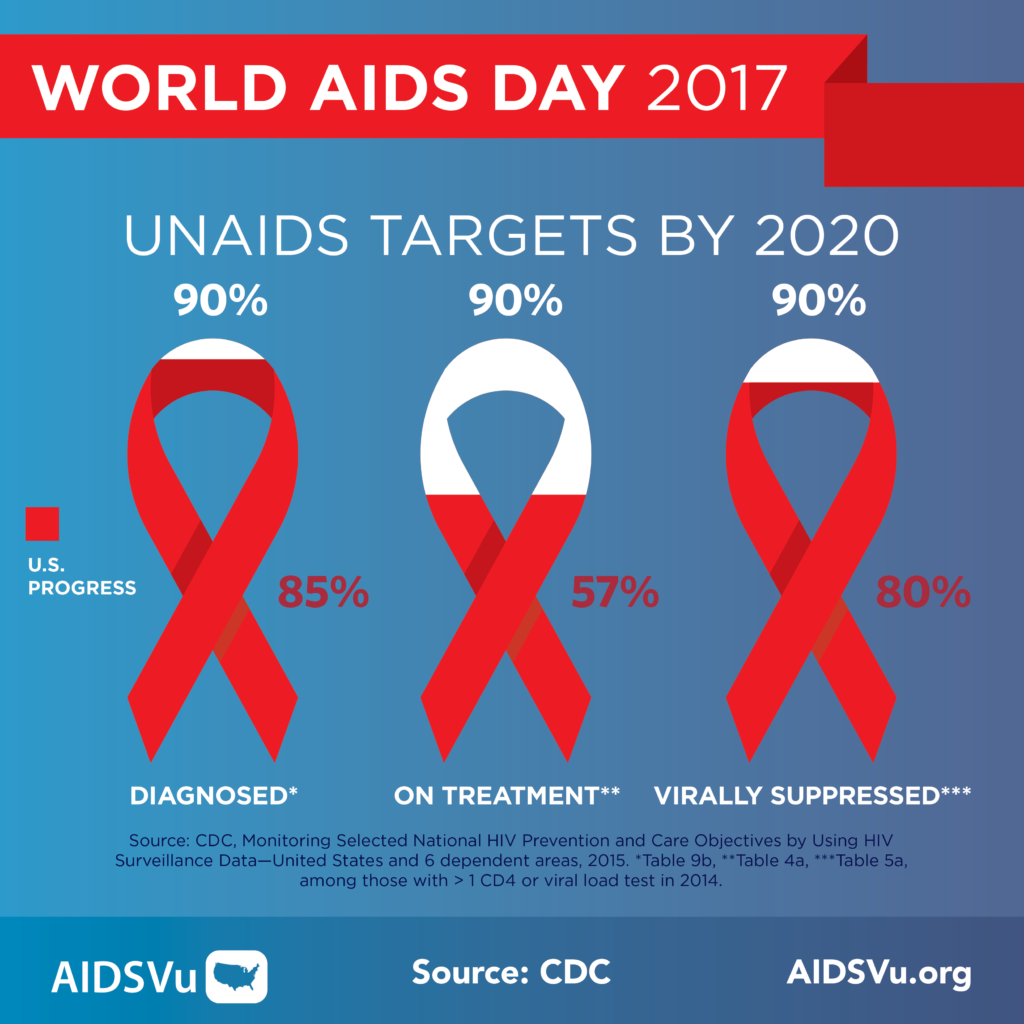
According to the U.S. Centers for Disease Control and Prevention’s report “Monitoring Selected National HIV Prevention and Care Objectives by using HIV surveillance Data- United States and 6 dependent areas, 2015,” 85% of individuals in the U.S. living with HIV know their status (Table 9b), 57% of those individuals are receiving sustained antiretroviral therapy (Table 4a), and 80% of the individuals receiving antiretroviral therapy are virally suppressed (Table 5a, among those with >1 CD4 or viral load test in 2014).
In many regards, the U.S. is a case study for progress, but there is much work left to be done. AIDSVu’s maps visualize the challenges that remain for highly impacted populations and geographic areas across the U.S. African Americans, for instance, represented 45 percent of the approximately 39,400 new HIV diagnoses in 2016, despite making up 12 percent of the population, and 1 in 8 African Americans living with HIV are not aware of their status.
A key piece of tackling the epidemic is understanding HIV where you live. To reach the UNAIDS goal of ending the epidemic by 2030, public health officials, policymakers, advocates, and medical practitioners across the globe need to use high-quality, locally relevant data to drive progress and inform strategies, programs, and resource allocation.
On World AIDS Day, be a part of the solution. End the epidemic globally by doing your part locally:
- Educate Family & Friends: Share our World AIDS Day graphics with your network.
- Get Tested & Find Services: AIDSVu provides its users with searchable locators for HIV testing sites, care services, and Pre-Exposure Prophylaxis (PrEP) providers.
- Explore Our Maps: Use AIDSVu’s interactive state-, county-, and ZIP code-level maps to see how the HIV epidemic impacts your community.