
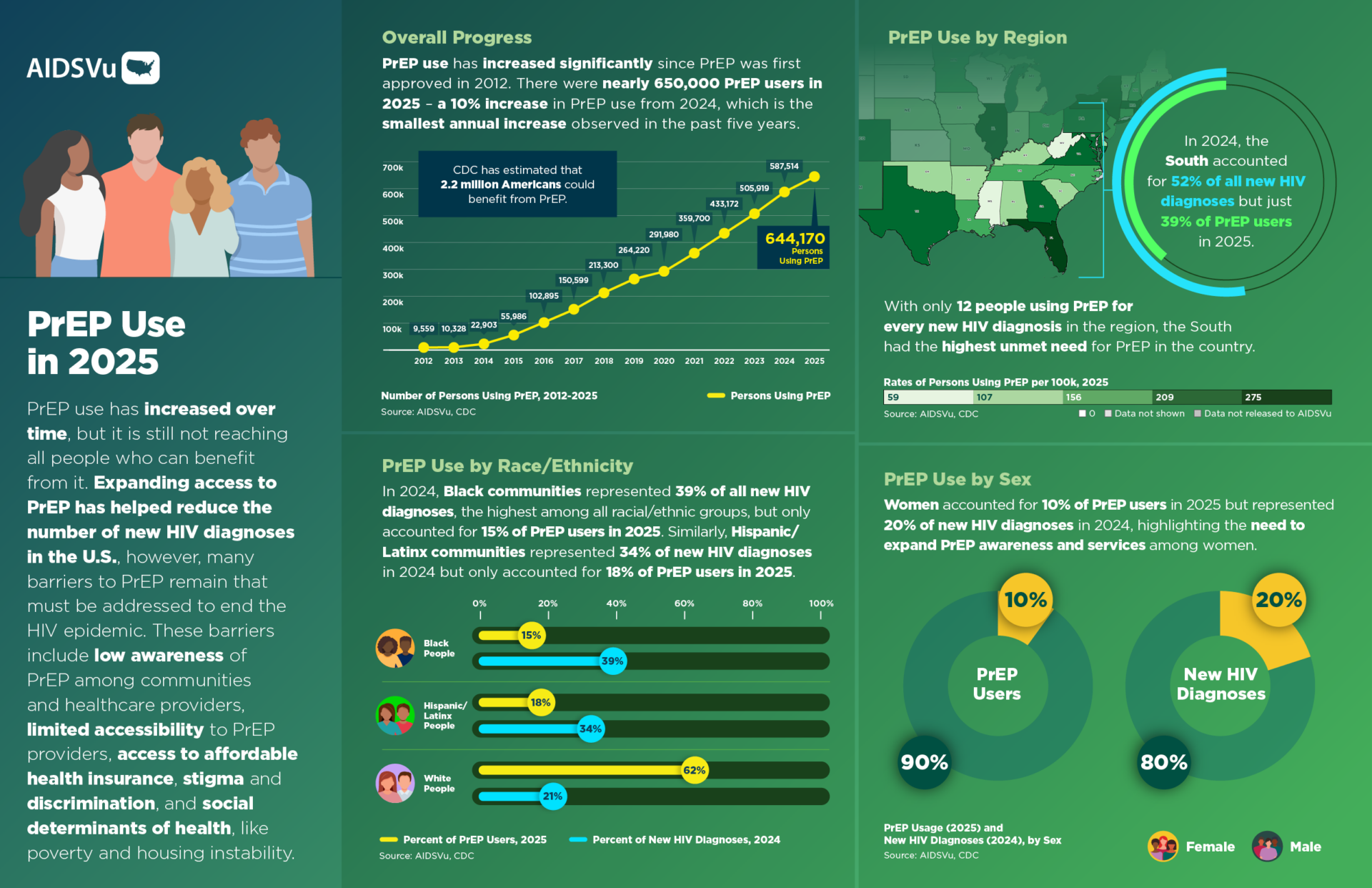
PrEP is a highly effective tool for preventing HIV, but disparities in access and use continue to limit its impact across the United States. While the number of people using PrEP has steadily increased over time, recent progress has slowed, underscoring the need for continued investment in HIV prevention efforts. From 2024 to 2025, the number of PrEP users increased by just 10%—the smallest annual increase observed in the past five years.
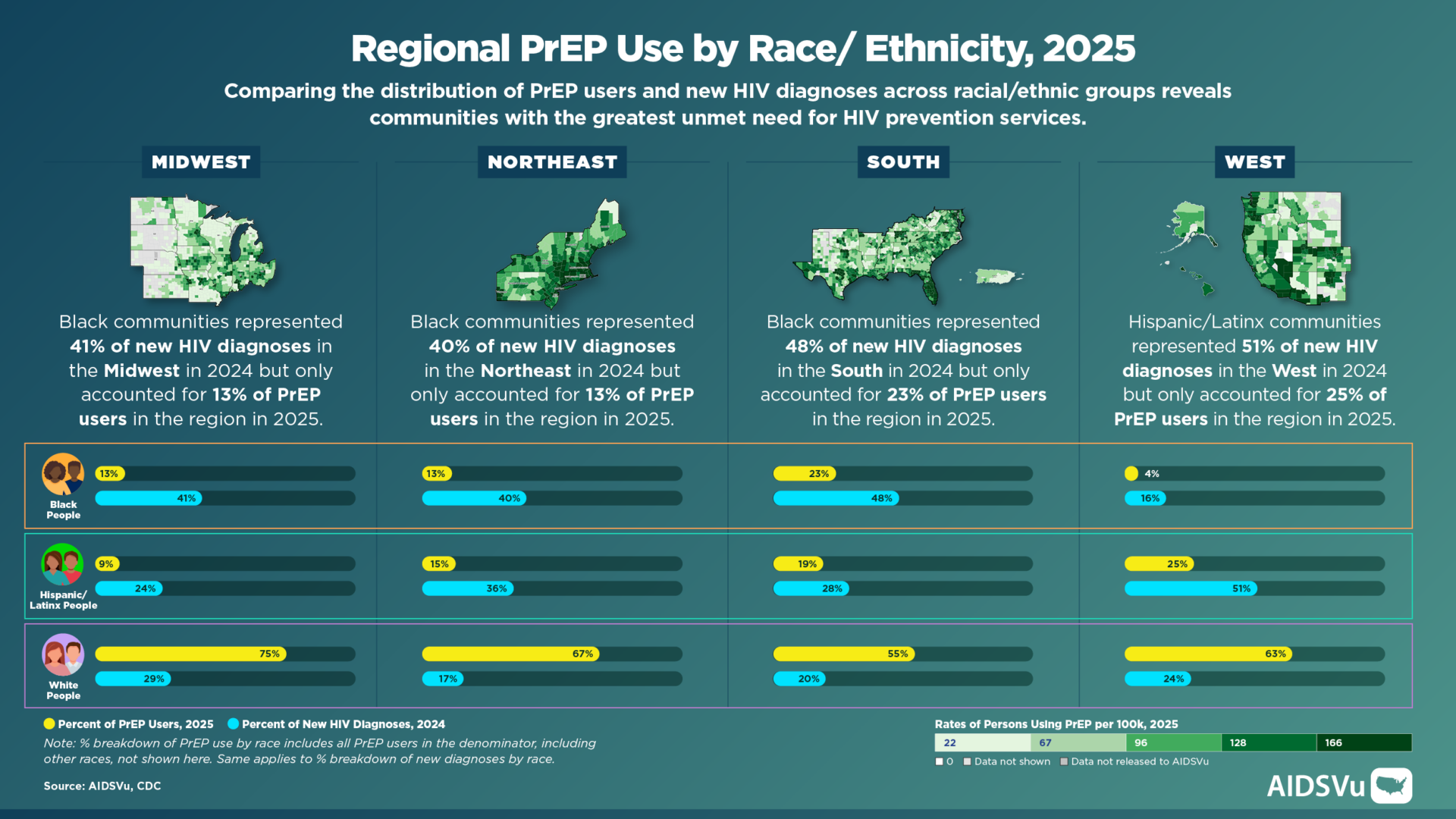
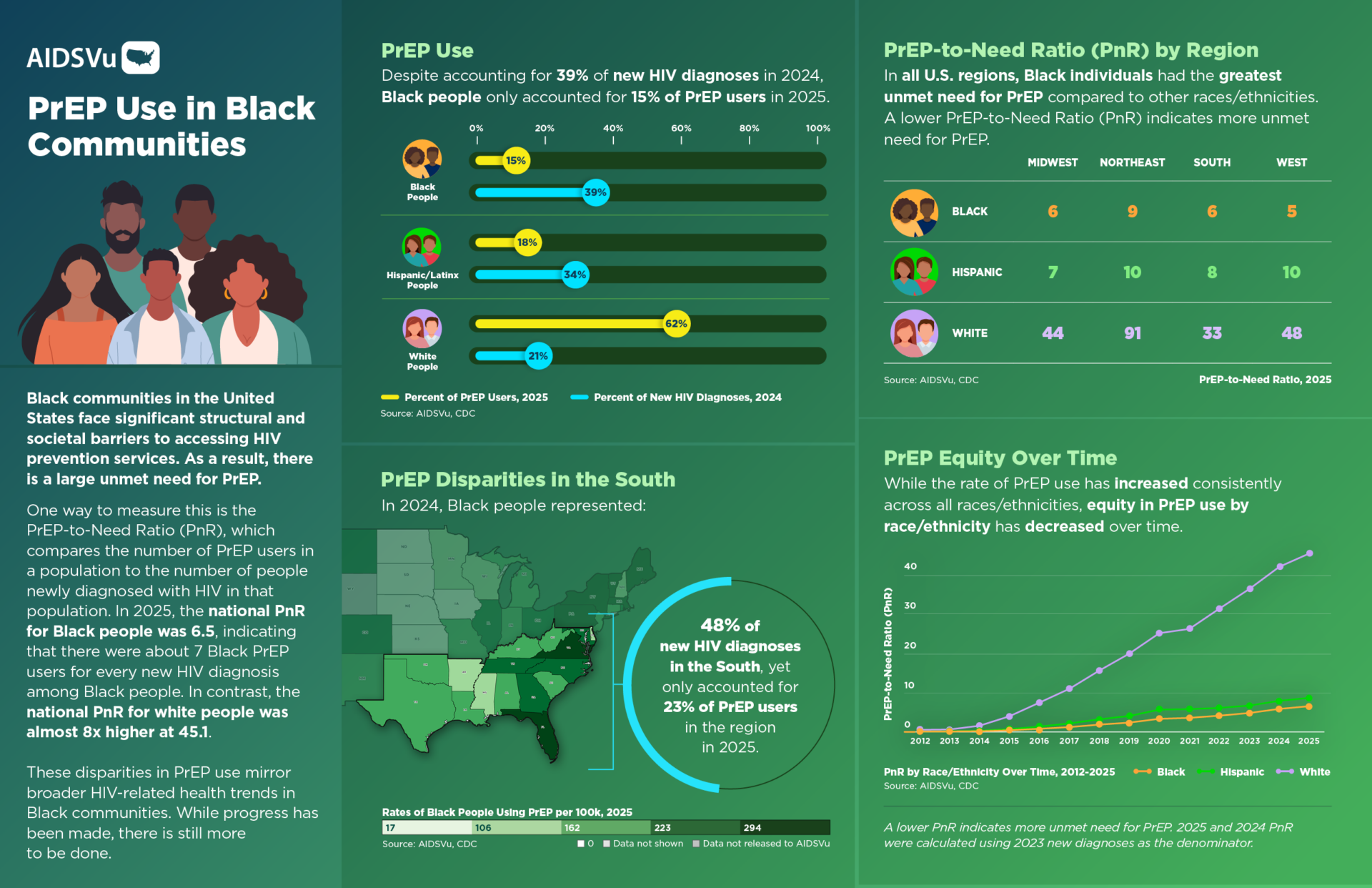
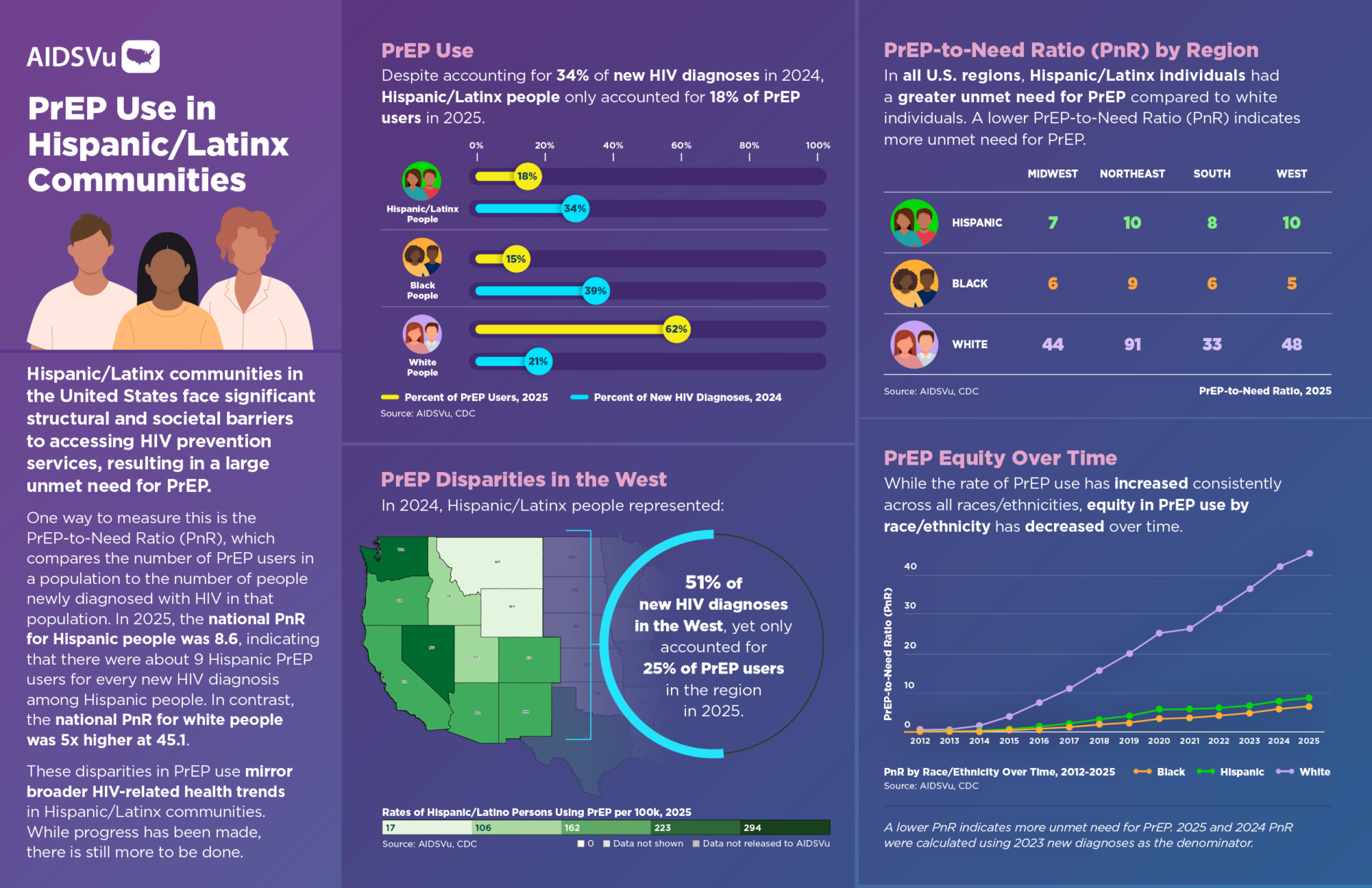
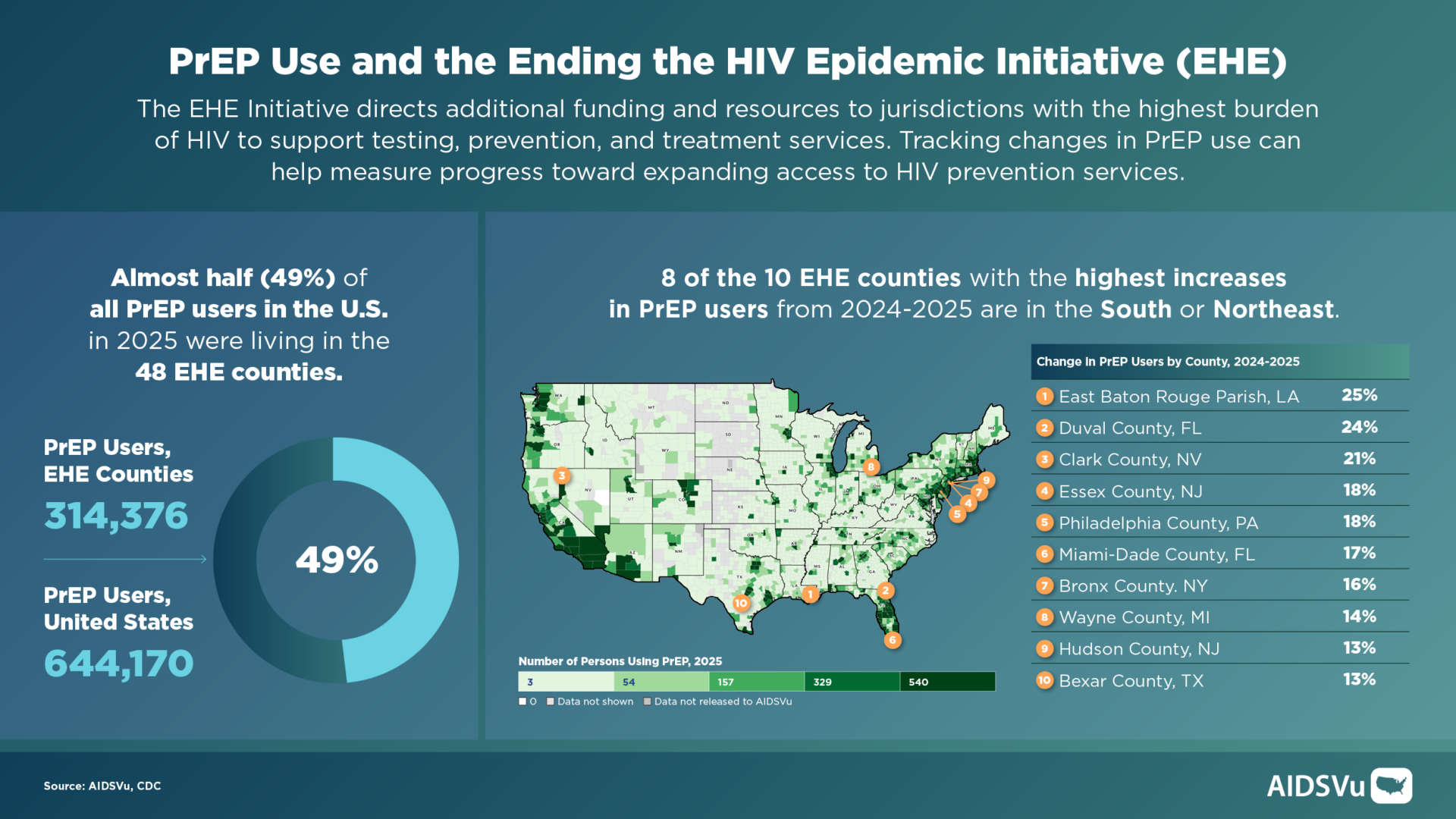
Although PrEP use has expanded nationwide, access remains uneven across regions and populations. In 2025, 39% of all PrEP users lived in the South, yet the region continued to have the lowest PrEP-to-Need Ratio (PnR) at 12, indicating the greatest unmet need for PrEP. Persistent racial and ethnic disparities also remain. In 2025, Black people accounted for just 23% of PrEP users in the South despite representing 48% of new HIV diagnoses in 2024. Similarly, in the West, Hispanic people accounted for 25% of PrEP users while representing 51% of new HIV diagnoses. Additionally, almost half (49%) of all PrEP users in the U.S. in 2025 were living in the 48 EHE counties.
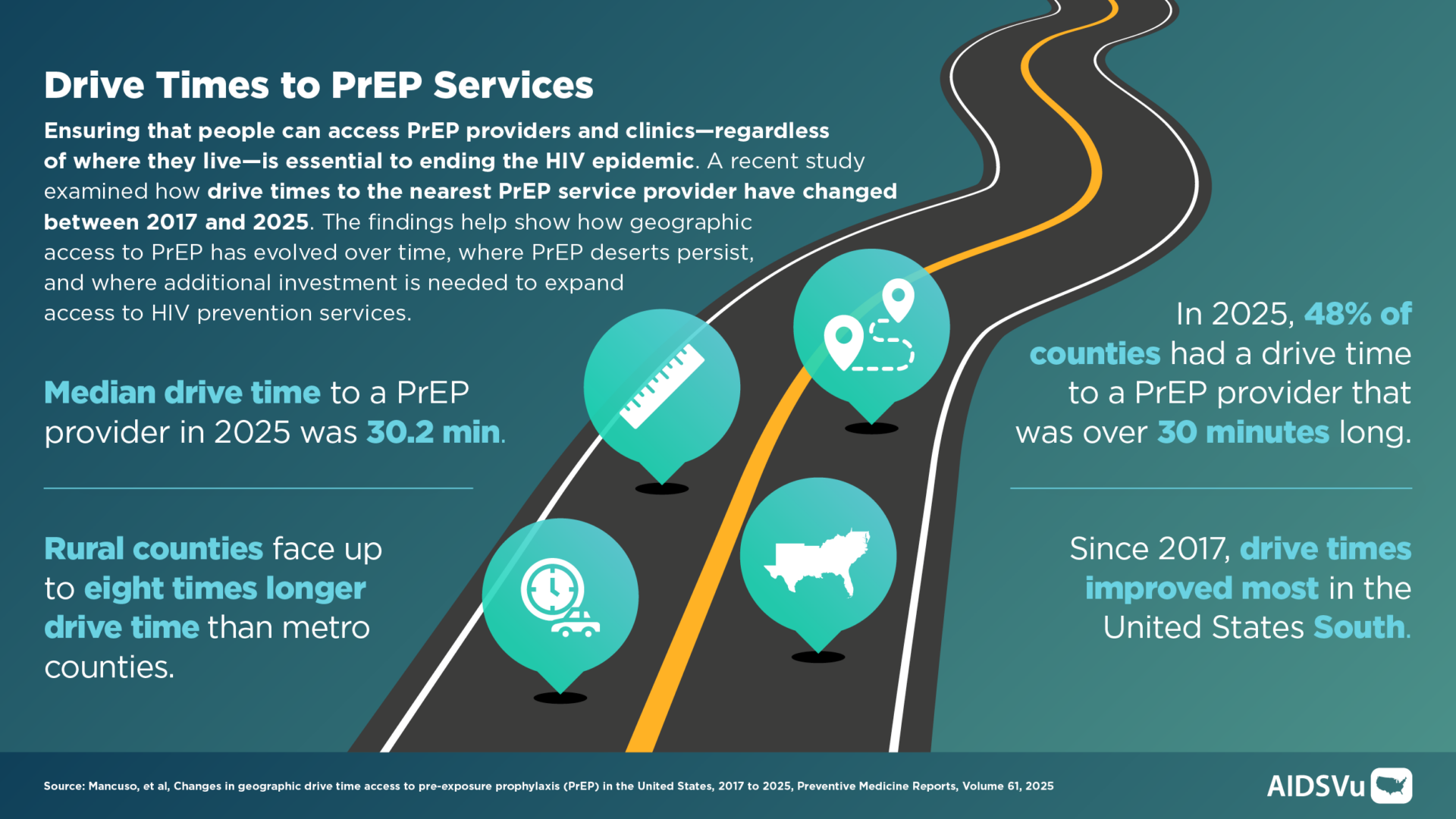
Geographic access to HIV prevention services also continues to be a challenge in many communities. Rural counties face up to eight times longer drive time than metro counties. These barriers, combined with persistent social and structural inequities, can make it more difficult for individuals to access the HIV prevention services they need.
As efforts to end the HIV epidemic continue, expanding equitable access to PrEP remains essential. Addressing disparities in PrEP availability and uptake will help ensure that everyone can benefit from this powerful HIV prevention tool.
PrEP Launch 2026
Explore our Resources
AIDSVu’s infographics are designed to highlight key trends in PrEP use and access across the United States. Share them on social media, print them as one-pagers, or incorporate them into presentations to help raise awareness about the importance of equitable HIV prevention.
PrEP Use in 2025
Regional PrEP Use
PrEP Use in Black Communities
Black Women and PrEP
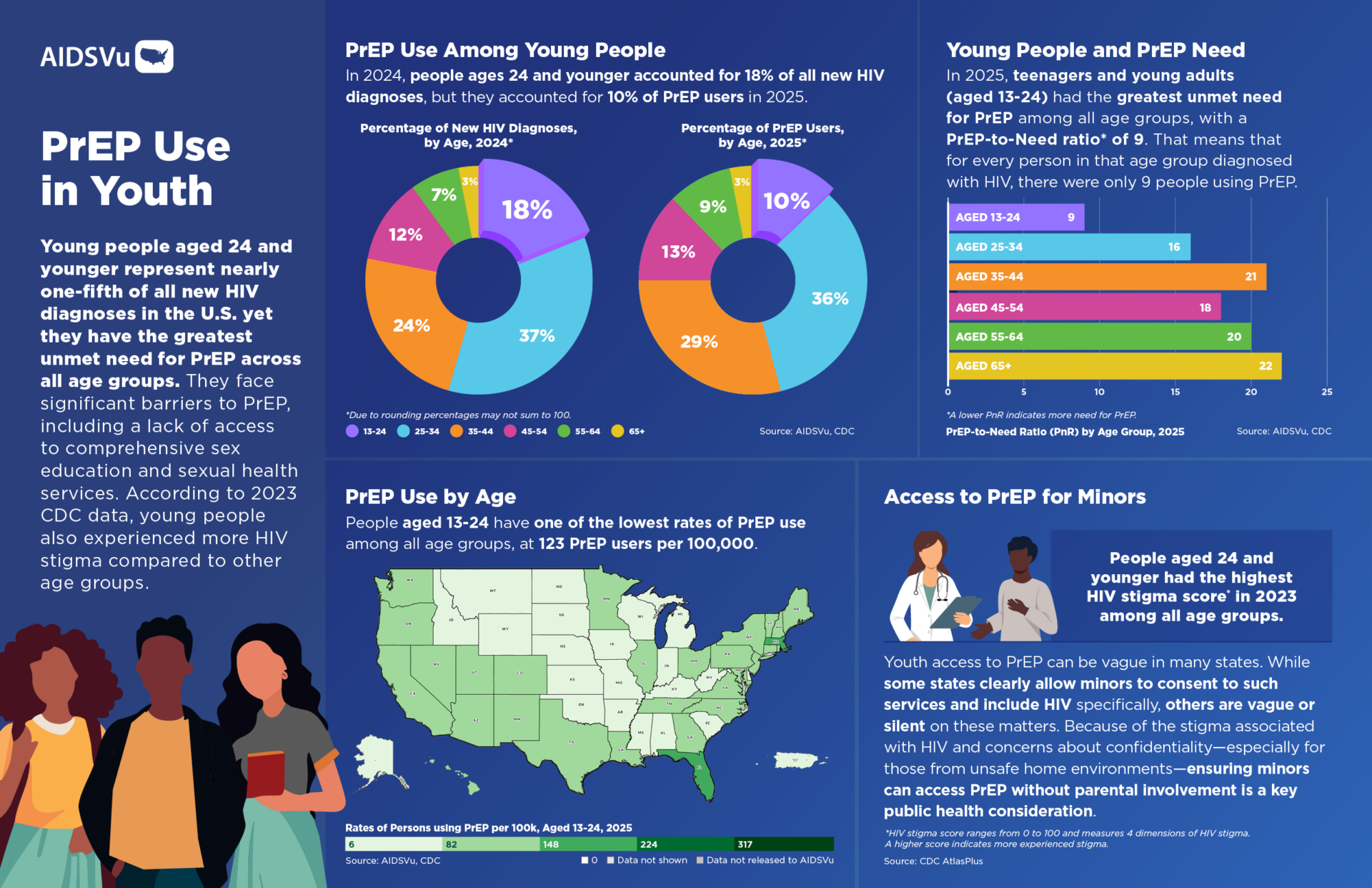
PrEP Use in Youth
PrEP Use in Hispanic/Latinx Communities
Drive Times to PrEP Services
PrEP Use and the Ending the HIV Epidemic Initiative (EHE)
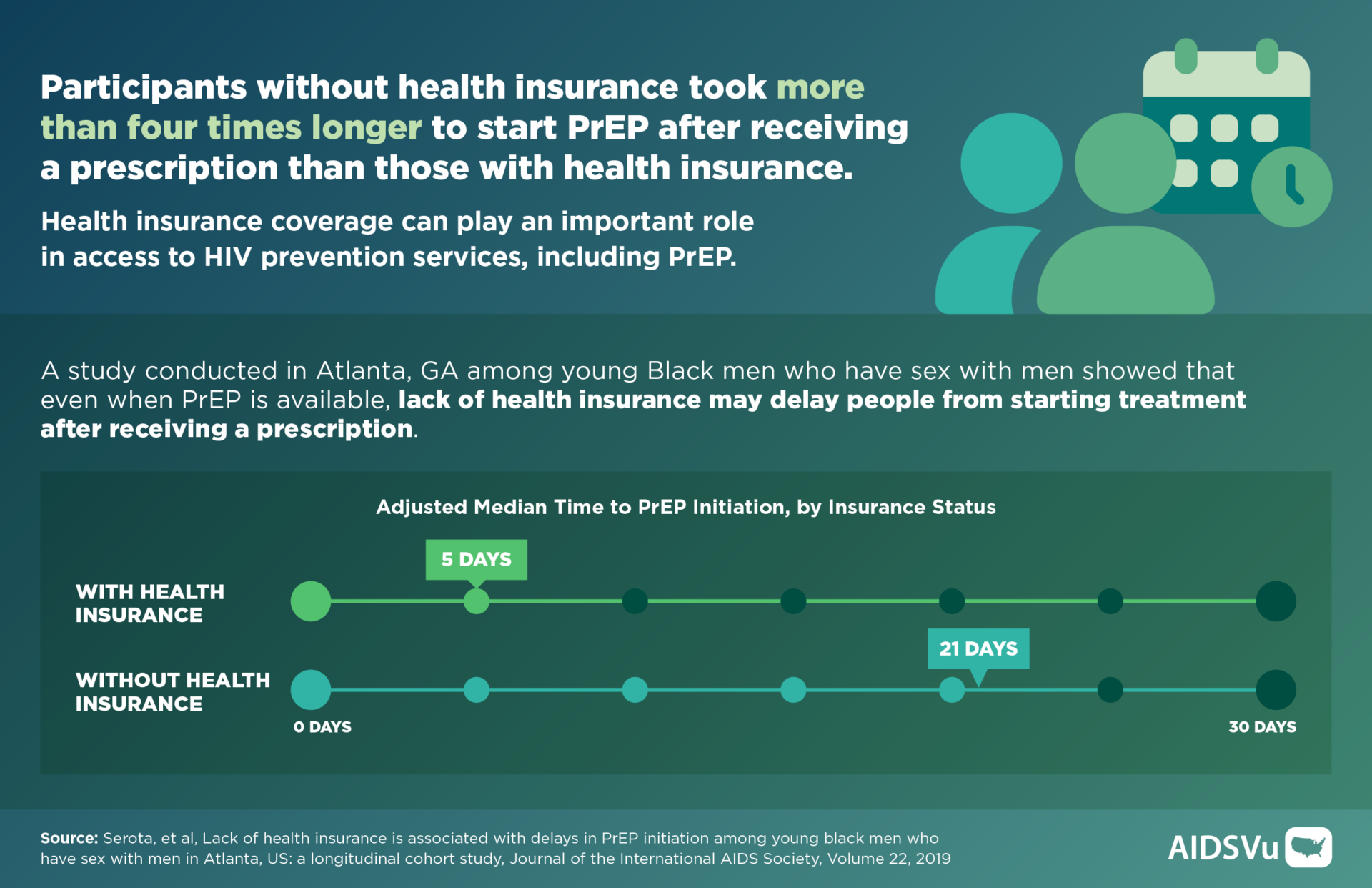
PrEP and Insurance Access
View partner resources to learn more about PrEP today:






Share these social media posts and infographics on LinkedIn, X, and Facebook to help spark conversations about PrEP use, equitable access to HIV prevention, and the ongoing effort to end the HIV epidemic.
Post 1 – Long form (LinkedIn or Facebook)
PrEP is a highly effective tool for preventing HIV, but disparities in access and use continue to limit its impact across the United States.
From 2024 to 2025, the number of PrEP users increased by just 10%—the smallest annual increase observed in the past five years. Continued efforts to expand equitable access to HIV prevention services are essential to ending the HIV epidemic.
Explore the latest AIDSVu PrEP data, infographics, and resources here: https://aidsvu.org/resources/toolkits/prep-launch-2026-toolkit/
Post 1 – Short form (X or Instagram)
PrEP use continues to grow in the U.S., but the increase from 2024 to 2025 was the smallest annual gain in the past five years. Explore the latest data and resources from @AIDSVu: https://aidsvu.org/resources/toolkits/prep-launch-2026-toolkit/
Post 2 – Long form (LinkedIn or Facebook)
#DYK? In 2025, 39% of all PrEP users in the U.S. lived in the South, yet the region still had the lowest PrEP-to-Need Ratio (PnR), indicating the greatest unmet need for PrEP.
Expanding equitable access to HIV prevention services remains critical to ending the HIV epidemic. Explore the latest AIDSVu PrEP data and resources here: https://aidsvu.org/resources/toolkits/prep-launch-2026-toolkit/
Post 2 – Short form (X or Instagram)
#DYK? Although 39% of U.S. PrEP users lived in the South in 2025, the region still had the greatest unmet need for PrEP. Learn more with the latest @AIDSVu data: https://aidsvu.org/resources/toolkits/prep-launch-2026-toolkit/
Post 2 – Short form (X or Instagram)
Access to HIV prevention services is about more than awareness—it’s also about geography. In 2025, rural counties faced drive times to a PrEP provider that were up to eight times longer than those in metro counties.
Reducing barriers to PrEP access is an important step toward ending the HIV epidemic. Explore the latest data and resources from AIDSVu: https://aidsvu.org/resources/toolkits/prep-launch-2026-toolkit/
Post 3 – Long form (LinkedIn or Facebook)
In 2025, rural counties faced drive times to a PrEP provider that were up to eight times longer than those in metro counties. Learn more about PrEP access with @AIDSVu: https://aidsvu.org/resources/toolkits/prep-launch-2026-toolkit/