In recognition of National PrEP Day, AIDSVu spoke with Bennett Klein of GLAD Law and Dr. Kenneth Mayer of The Fenway Institute about Massachusetts’ new PrEP protections law. The legislation expands and safeguards access to all FDA-approved PrEP medications while removing key barriers, offering a timely example of how states can strengthen HIV prevention access.
Q: Massachusetts’ recent PrEP protections law sets a national precedent for extending comprehensive PrEP access protections across both private insurance and Medicaid (MassHealth). What makes this legislation significant, and what barriers to PrEP access does it address?
Bennett Klein: The Massachusetts PrEP law, passed in June 2026, tackles some of the key obstacles to PrEP access. We know that insurance practices, such as cost sharing and utilization management, are real barriers that drive down PrEP use, especially among the people most vulnerable to HIV. The law prohibits all commercial insurers and the state’s Medicaid program from requiring cost sharing or utilization management, including prior authorization or step therapy, for any FDA-approved HIV prevention medication and any therapies developed in the future. The bill also includes the ancillary laboratory testing and support services that are necessary to initiate and continue PrEP. In addition, recent incarceration is associated with significantly increased risk for HIV. The bill requires that all correctional facilities provide PrEP to at-risk individuals upon release. We hope that this provision, too, will add a powerful tool in reducing HIV in Massachusetts.
Dr. Kenneth Mayer: This legislation is significant since it provides additional assurance of access to PrEP by writing PrEP access protections into state law and not solely relying on federal policy. Until now, the elimination of out-of-pocket personal expenses for PrEP coverage rested on the U.S. Preventive Services Task Force’s “A” grade under the Affordable Care Act (ACA). Unfortunately, a 2025 Supreme Court ruling gave the HHS Secretary direct authority over the Task Force’s membership and recommendations, and the current Secretary has already begun reshaping it. That makes the federal foundation for PrEP coverage shakier than at any point since the ACA.
The new Massachusetts law closes the gaps we see in clinic every week. It requires private insurers, MassHealth (our state’s Medicaid plan), and the Group Insurance Commission to cover every FDA-approved PrEP medication with no co-pays, no deductibles, and no prior prior authorizations. It accepts prescriptions from any licensed practitioner, expands pharmacist prescribing authority (who can now prescribe PrEP, PEP, and doxyPEP), and reaches people leaving correctional facilities. In short, it treats PrEP the way we should treat any proven prevention tool: available when a person is ready, without a financial or administrative test first.
Having worked on the original PrEP research studies that demonstrated efficacy about 15 years ago, it is gratifying to see these policies enacted, since they should dramatically increase access to those who can most benefit from PrEP.
Q: As we recognize National PrEP Awareness Day, what do you hope policymakers, health care providers, and the public understand about the role of PrEP in ending the HIV epidemic in the U.S.?
Bennett Klein: It can be challenging for many people today to appreciate the urgency of ending the HIV epidemic. As a gay man who came out in 1979 – just a few years before the epidemic emerged – I remember the days of no treatment, no prevention, and people were experiencing horrific opportunistic infections, often dying within months or just a few years of an AIDS diagnosis. At the time, a drug that can prevent HIV by close to 100 percent was unfathomable. Many people today are too young to know that world and to appreciate that the epidemic is still ongoing. While people can now live with HIV, HIV is still a life-altering diagnosis, in part because stigma continues to severely burden many people living with HIV today. We are at an extraordinary moment in HIV prevention. Since 2012, PrEP has held great promise for ending the HIV epidemic. Today, we have the first-ever twice-yearly long-acting injectable PrEP. But too few people who need PrEP have access to it. We have the tools to stop HIV, and we need to be decisive in eliminating the barriers to access.
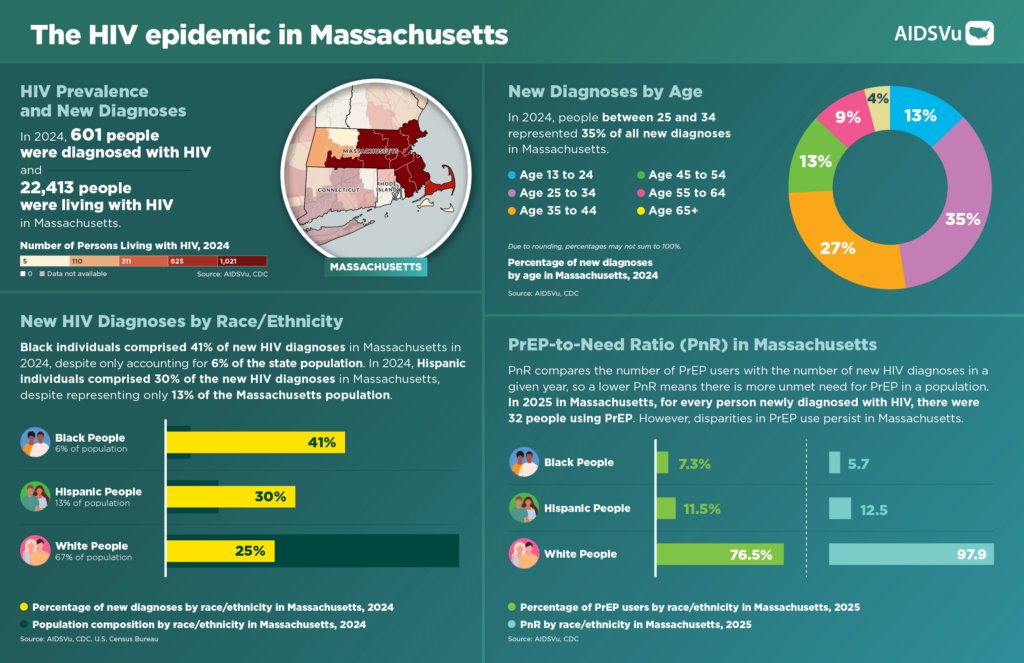
Dr. Kenneth Mayer: PrEP works. When taken as prescribed, it reduces the risk of acquiring HIV from sex by more than 99 percent, and we now have options ranging from a daily pill to an injection given twice a year. The science is settled; what stands between us and the end of the epidemic is access. The people at highest risk, including Black and Latino gay and bisexual men, transgender women, and people who use drugs, remain the least likely to be on PrEP. Cost, paperwork, stigma, and distance from a knowledgeable provider explains most of that gap. In Massachusetts, the number of new HIV infections increased by 34% since 2022, disproportionately among youth of color. We still have work to do to ensure PrEP equity, and this legislation will help.
For policymakers, the message is that PrEP is one of the most cost-effective investments in public health, and protecting it is cheaper than treating the infections it prevents, since HIV treatment is lifelong. For providers, PrEP belongs in primary care. Every clinician who takes a sexual history from a patient should be comfortable offering it. For the public, PrEP is safe, effective, and increasingly simple, and Massachusetts has just made it easier to access than it has ever been.
Expanding PrEP Access Through Patient-Centered Care
Q: As a healthcare provider, can you share more about your experience providing care to patients who experience access barriers to PrEP like cost-sharing or prior authorizations? How do these barriers negatively impact patients and their ability to start or stay on PrEP?
Dr. Kenneth Mayer: Barriers to PrEP access are problematic, since the moment a patient decides to start PrEP is fragile. The patient weighed their own risk and asked for help. If the answer at the pharmacy counter is a several-hundred-dollar deductible, or a denial pending prior authorization, many people do not come back.
Cost-sharing is a barrier even when it looks small. A co-pay that is manageable for one month becomes a reason to skip a refill the next, and PrEP only protects people who are actually taking it. Prior authorization adds a second problem: it consumes clinician and staff time that a community health center does not have to spare, and it signals to the patient that their prevention is somehow suspect. Neither requirement has ever made a patient safer. They only decide who gets protected and who does not.
I recall one patient who was so off put by the excess paperwork and approvals delays that they decided not to use PrEP. I also have heard many providers grouse about the time-consuming nature of the prior approval process, creating a disincentive for them regarding PrEP prescribing.
Q: The law requires coverage of all FDA-approved PrEP medications, including long-acting injectable options, without co-pays, deductibles, or prior authorization. Why is it important for patients to have barrier-free access to different HIV prevention options, and how can protecting patient and provider choice improve PrEP uptake and adherence?
Dr. Kenneth Mayer: There is no single PrEP option that is best for everyone. A daily pill works well for people whose routines support it. For others, a daily pill is a daily reminder of stigma, a bottle a family member might find, or one more thing to forget. Long-acting injectables change the conversation entirely: the question becomes “can you come in every few months,” and for a great many patients the answer is yes when the answer to “can you take a pill every day” was no.
When insurers steer patients to the cheapest option first or require a documented failure on one medication before covering another, they are making a clinical decision without seeing the patient. Protecting choice means the provider and the patient pick the tool that fits the patient’s life, and adherence follows from fit. We have seen this pattern before in contraception: when every method is covered without cost-sharing, more people use one, and they stay on it longer. PrEP is no different. At Fenway Health, we offer all the options and have found a dramatic increase in overall PrEP prescriptions as the new modalities have become available.
Q: The law also includes new requirements for correctional facilities to connect people leaving incarceration with HIV prevention information, evaluation, and access to PrEP. Why is continuity of HIV prevention care during transitions back into the community critical?
Dr. Kenneth Mayer: The weeks after release are among the highest-risk periods for HIV acquisition that we know of. People leave with unstable housing, interrupted relationships, often a return to substance use, and almost never a scheduled medical appointment. Whatever health care they received inside typically ends at the gate. If we wait for someone to find their way to a clinic, ask about PrEP, get a prescription, and clear an insurance hurdle; the window of greatest risk has usually already closed.
The law’s approach is to move prevention upstream: evaluate people before release, give them information they can act on, and where eligible, offer PrEP before they walk out. The six-month injectable is especially well suited here, because a single dose given before release protects someone through the entire reentry period without a pharmacy visit, a refill, or a daily routine. That is exactly the kind of population for which long-acting prevention was designed.
This provision also matters for equity. Incarceration falls disproportionately on Black and Latino communities, the same communities that carry a disproportionate share of new HIV diagnoses and the lowest PrEP uptake. Reaching people at reentry is one of the few interventions that addresses both gaps at once. To optimize the benefit from this provision of the PrEP enabling legislation, support for case workers, health aides and clinicians to facilitate a warm handoff is essential.
Advancing PrEP Access Through Policy and Legal Protections
Q: The recent legislation requires all state-regulated commercial plans, Health Connector plans, state employee health plans, and MassHealth to cover all FDA-approved PrEP medications and related services without co-pays, deductibles, or prior authorization. Why was it important to establish these protections in state law, particularly given changes in the federal policy environment?
Bennett Klein: Current federal law under the Affordable Care Act (ACA) prohibits cost sharing for all preventive services given an A or B rating by the United States Preventing Services Task Force (USPSTF). The USPSTF has given PrEP an A rating in two separate recommendations. The U.S. Supreme Court, in the case Kennedy v. Braidwood, recently upheld the constitutionality of the ACA preventive services mandate, but it did so by giving the Secretary of Health and Human Services new and unprecedented authority to appoint USPSTF members, remove them, and reverse and reject their recommendations. Federal guidelines prohibiting prior authorization practices for all FDA-approved PrEP medications can also be reversed. States cannot rely on a federal government that has consistently demonstrated hostility to HIV prevention and public health.
Q: It has been a multi-year journey to pass this new state law. What did it take to successfully enact this legislation in Massachusetts?
Bennett Klein: There is so much of the legislative process that requires the right moment. In June 2025, three factors established the urgency in protecting access to PrEP: the issuance of the Supreme Court decision in Braidwood, the FDA approval of long-acting injectable PrEP medication, and the growing realization that we cannot rely on the federal framework to protect public health. It was also important to mobilize the stakeholders that will have an impact on legislators. We made sure that legislators understood that HIV is still a critical issue for LGBTQ people and organizations. We also organized strong support from healthcare providers, former and current public health officials, and national and local medical and public health organizations. Healthcare providers have credibility on HIV prevention issues and are a key part of any legislative effort.
Q: Now that the law has been passed, what can stakeholders in Massachusetts do to ensure that insurers and plans comply with it?
Bennett Klein: I have learned in this job that passing a law is only the first step. There are always issues of implementation to ensure that the reality on the ground is changing. Unfortunately, we are already seeing some noncompliance in Massachusetts among insurers. We are working with state officials to make sure that the requirements of the law are followed. It is crucial that people who are experiencing insurance barriers to PrEP contact GLAD Law so that we have a full understanding of what is happening and can take steps to address problems.
Q: With this recent success, how can Massachusetts serve as a model for other states considering policies to improve PrEP access and advance HIV prevention?
Bennett Klein: Insurance legislation can be a daunting and formidable path. We showed that a law covering not only all private insurers, but our state Medicaid agency, is doable with the right message, the right stakeholder support, and perseverance. I am happy to speak to people in other states who want to hear more about our experiences.