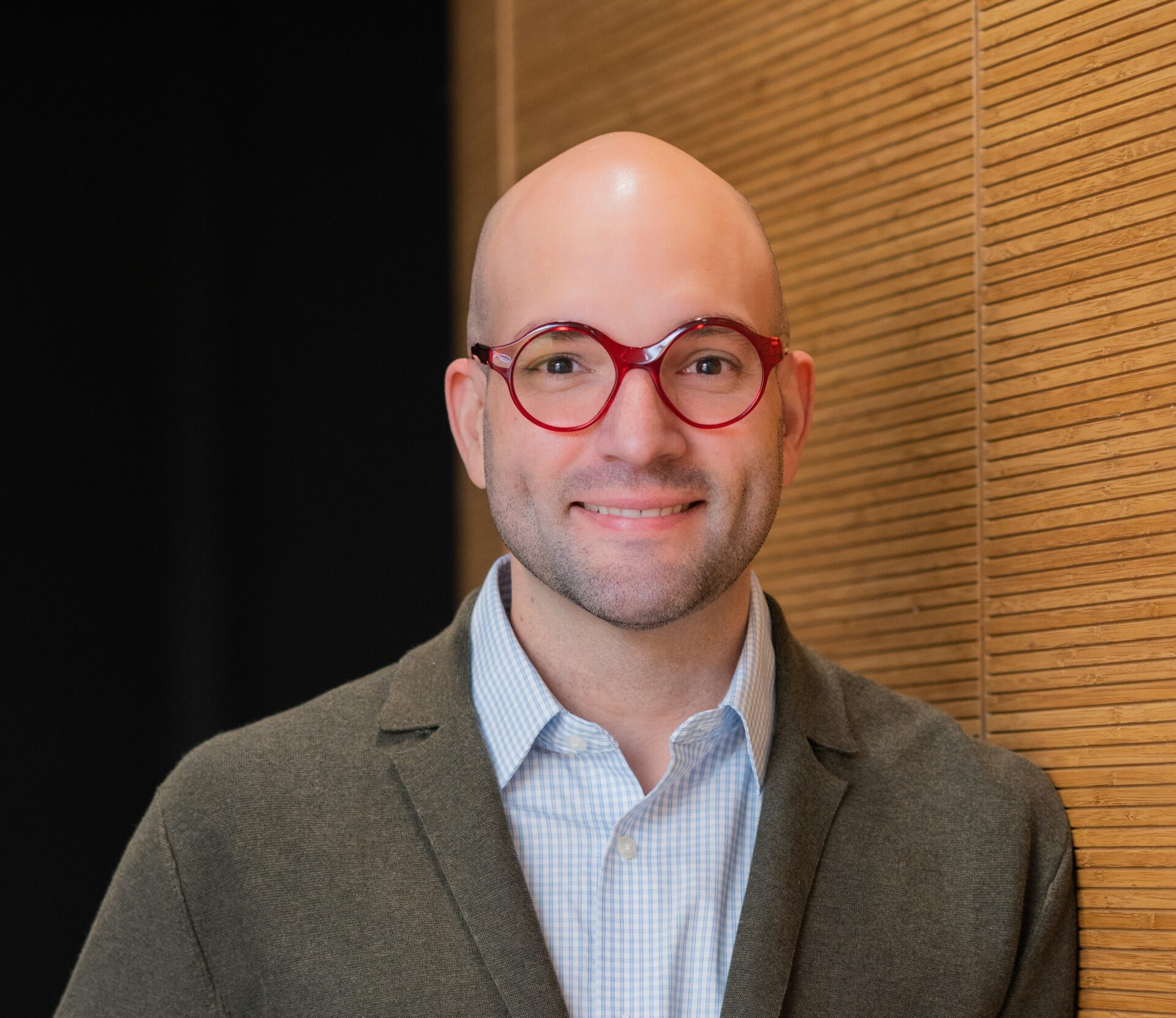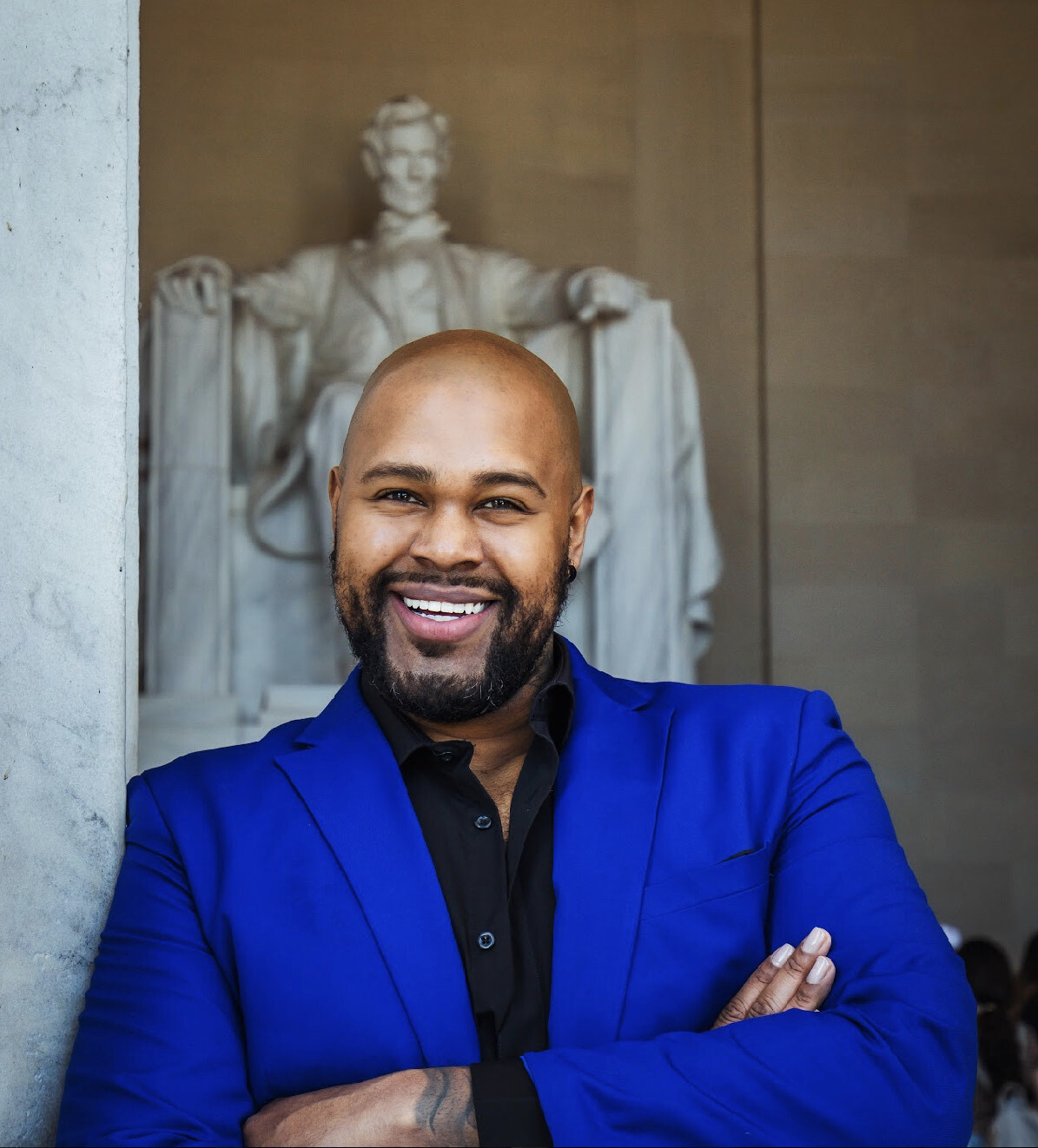
Deondre B. Moore is Vice President of Community Impact at The Freelux Project, a community-centered organization working to advance health equity, amplify Black queer voices, and create culturally responsive spaces rooted in connection, advocacy, and care. Moore began his HIV advocacy after being diagnosed with HIV at age 19 and has since become a prominent voice for HIV education, community engagement, and the Undetectable = Untransmittable (U=U) message. At The Freelux Project, his work centers on bringing culture, conversation, and care together to create more affirming pathways to HIV testing, prevention, and care for Black queer and bisexual men. Moore also contributed to GLAAD’s 2026 State of HIV Stigma Report as a member of its Community HIV Stigma Advisory Committee.
Q: At The Freelux Project, you’ve talked about bringing culture, conversation, and care together rather than expecting people to come to traditional health spaces. What have you learned about creating spaces where Black queer and bisexual men feel seen, connected, and comfortable talking openly about HIV and sexual health?
The biggest lesson that I have learned with creating non-traditional spaces for Black queer and bisexual men is that they value being seen, heard, and learning how to become liberated in their own sexual health journeys. We’ve seen that it is much easier to get these folks connected to healthcare centers/settings and services when we build the bridge to connect them. A safe bridge, a trusted bridge!
Q: You contributed to GLAAD’s 2026 State of HIV Stigma Report, which found that 44% of Americans still do not accept U=U and only 31% of Gen Z adults say they feel knowledgeable about HIV. After decades of scientific progress, why has public understanding struggled to keep pace? What will it take to close that gap?
I think the biggest issue in the public understanding is that the public still is not seeing or hearing this information from healthcare providers and clinicians, which is extremely problematic and negligent in my opinion. This increases medical mistrust as well.
In order to close the gap, we need to rely more on trusted community influencers to use their platforms to continue educating the masses until it reaches everyone!
Q: You’ve shared your own experience of being diagnosed with HIV at 19 and the importance of having family and community support. How has that experience shaped the way you think about stigma today, and what can communities do to make sure people living with HIV feel supported rather than isolated or judged?
Being diagnosed with HIV at 19 completely changed the trajectory of my life. At that age, I was still figuring out who I was, what I wanted my future to look like, and where I fit in the world. Then suddenly, I had this diagnosis that, because of stigma, could make you feel like your entire identity had been reduced to a status.
What made a tremendous difference for me was having family around me – especially my mom. I had people who reminded me that I was still Deondre. I was still worthy of love, opportunity, success, intimacy, and a full life. HIV was something I am living with; it is not the definition of who I am.
That experience is a huge part of why I approach stigma the way I do today. Stigma isn’t just about someone saying something negative about HIV. It can show up in our families, relationships, churches, healthcare systems, social spaces, and even within the LGBTQ+ community. Sometimes it’s overt, and sometimes it’s a joke, a dating profile, a rejection, or the language we casually use when talking about people living with HIV.
If we really want people living with HIV to feel supported, we must create communities where disclosure doesn’t automatically come with fear of rejection or judgment.
That starts with education, but it also requires empathy. We need more people to understand U=U and what it means for someone who is undetectable to live a healthy life and not sexually transmit HIV. But beyond science, we also must humanize conversation. People living with HIV deserve to experience love, sex, relationships, family, joy, and everything else that makes life full.
And I think those of us who are comfortable sharing our stories have an opportunity to help change the narrative. I talk openly about living with HIV because I want that 19-year-old who was just diagnosed yesterday to see someone thriving and know that their dreams did not end with their diagnosis.
Ultimately, I want us to move beyond simply telling people living with HIV that they shouldn’t feel ashamed. We must build families, communities, healthcare systems, and spaces that give them absolutely no reason to feel ashamed in the first place.
Q: According to AIDSVu, while the number of new HIV diagnoses decreased by 25% for white men who have sex with men (MSM) from 2025 to 2024, Black MSM only saw a 10% decrease. Black gay and bisexual men continue to be disproportionately impacted by HIV. Where do you see the greatest opportunities to close those gaps within healthcare and communities?
For me, the greatest opportunity is closing the gap between what we know works and whether Black gay and bisexual men can truly access it, trust it, and see themselves reflected in it.
We have incredible tools for HIV prevention, testing, and treatment, but innovation means very little if the communities most impacted are still facing barriers to care. We have to invest in culturally responsive healthcare, increase access in the communities where people actually live, and make services easier to navigate. That means meeting people where they are. Whether that’s through telehealth, community-based initiatives, social media, nightlife, barbershops, churches, ballroom, Pride events, or other spaces where community already exists.
I also think we have to stop viewing community engagement as an accessory to healthcare. Community is part of the healthcare infrastructure. Black gay and bisexual men need to be involved not just as patients or participants, but as decision-makers, educators, navigators, influencers, and leaders.
That’s a big part of what we’ve tried to demonstrate through The Freelux Project. We create nontraditional spaces where conversations about HIV, PrEP, sexual health, mental health, relationships, and wellness can happen without people feeling like they’ve walked into a clinical setting. Then, the responsibility is to build a real bridge from that engagement into testing, prevention, treatment, and sustained care.
Finally, we have to address stigma. We can expand services all day, but if someone is afraid of being judged because they’re Black, gay, bisexual, living with HIV, taking PrEP, or simply being open about their sexual health, we haven’t truly created access.
For me, closing this gap requires healthcare systems, pharmaceutical partners, public health departments, and community organizations to stop simply asking, “How do we reach Black gay men?” and start asking, “How do we invest in Black gay men and the organizations they already trust?”
Q: What is one thing you hope people take away from National Gay Men’s HIV/AIDS Awareness Day this year?
I hope that every learns and understands that they are valued, seen, and that no matter their HIV status they deserve love and liberation in this world.