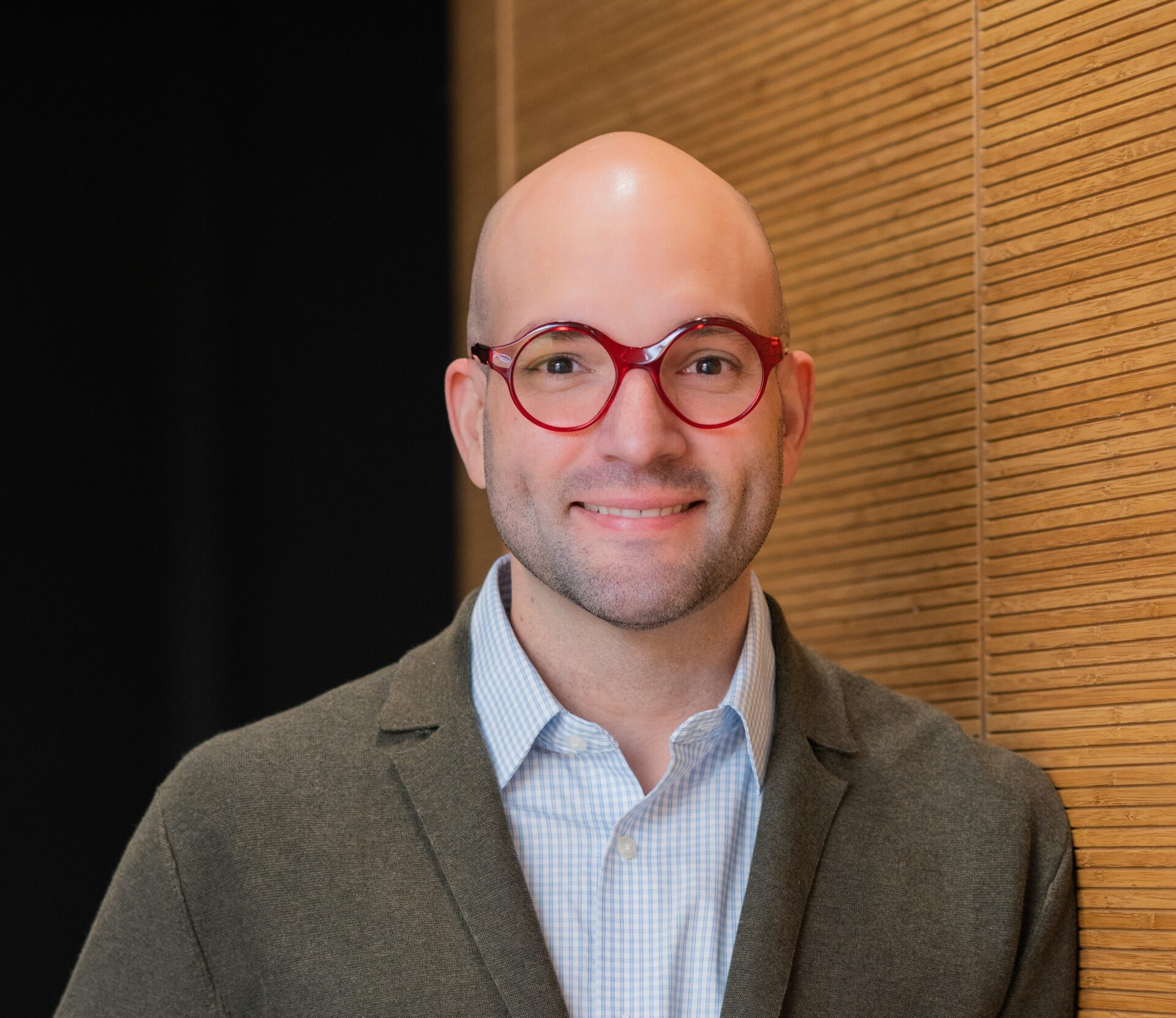
Carlos E. Rodriguez-Diaz, PhD, MPHE, MCHES, is Chair and Professor of Community Health Sciences at the Boston University School of Public Health. His work examines community-engaged and culturally grounded approaches to HIV prevention, sexual health, and health equity in the United States, Puerto Rico, and the Caribbean. Dr. Rodriguez-Diaz’s research explores how racism, stigma, and other structural barriers affect health, hoping to advance HIV services for Latinx, migrant, and LGBTQ+ communities.
Q: Your research looks at how stigma and the conditions in which people live shape their access to HIV prevention. In 2024, Hispanic/Latinx individuals accounted for 34% of new HIV diagnoses in the United States, despite making up only 19% of the U.S. population. What are the biggest barriers Latinx communities face?
There is a combination of factors that serve as barriers that drive HIV inequities among Latinx communities. The lived experience of Latinx people is not siloed. In the context of the United States, Latinx populations are currently facing narratives of exclusion and policies that explicitly persecute minoritized populations, anti-immigrant sentiment, as well as cuts in services that are fundamental for their well-being. This is compounded by services that may not be culturally congruent and by understaffed or under-resourced organizations in their communities.
Q: Your latest study published in Milbank Quarterly used CDC data shown on AIDSVu to examine new HIV diagnoses following the Trump administration’s 2018 announcement proposing changes to the “public charge” rule, which meant that use of public benefit programs could impact one’s green card eligibility. What did you find in counties with more aggressive immigration enforcement?
We documented that sanctuary counties are good for health. New HIV infections were more likely to be reported in counties with more anti-immigrant policies.
Q: You helped develop a decision-support tool in English and Spanish to help people compare daily oral and long-acting injectable pre-exposure prophylaxis (PrEP) options. What did community members tell you they needed to make informed decisions? How can tools like this help patients and providers choose a prevention option that fits their needs?
Providers and patients need simple, easy-to-use tools that facilitate conversations about HIV and preventive care while supporting decision-making in light of different alternatives that could be equally beneficial but with different requirements for adherence and monitoring.
Q: In your activism, you’ve emphasized that efforts to end the HIV epidemic cannot succeed when people are afraid to seek care. What can healthcare providers, health departments, and community organizations do to build trust and help Latinx communities feel safe accessing HIV testing, prevention, and treatment?
We have learned that it is not enough to have people who look like us to facilitate access and engagement in care. We need to build trust in healthcare services, and that requires healthcare providers and public health leaders to listen and take the time to deliberately make changes in response to the communities we serve. Not all communities are equal, and no magic intervention fits all. We need to maximize healthcare encounters to show that we care and pay attention to individual and community needs. Our public health initiatives must center on the communities we expect to benefit from our shared efforts.
Q: On National Latinx HIV/AIDS Awareness Day, where do you see the biggest opportunities to improve HIV prevention among Latinx communities?
Our Latinx communities are mighty and have resisted oppression for centuries. We have evolved and learned from our experiences, which are making us wiser and stronger. We have the capacity to resist oppression and to use our strengths to support and protect our communities. Our communities can work together and with other groups disproportionately affected by HIV to dismantle systems that increase and perpetuate our vulnerability.