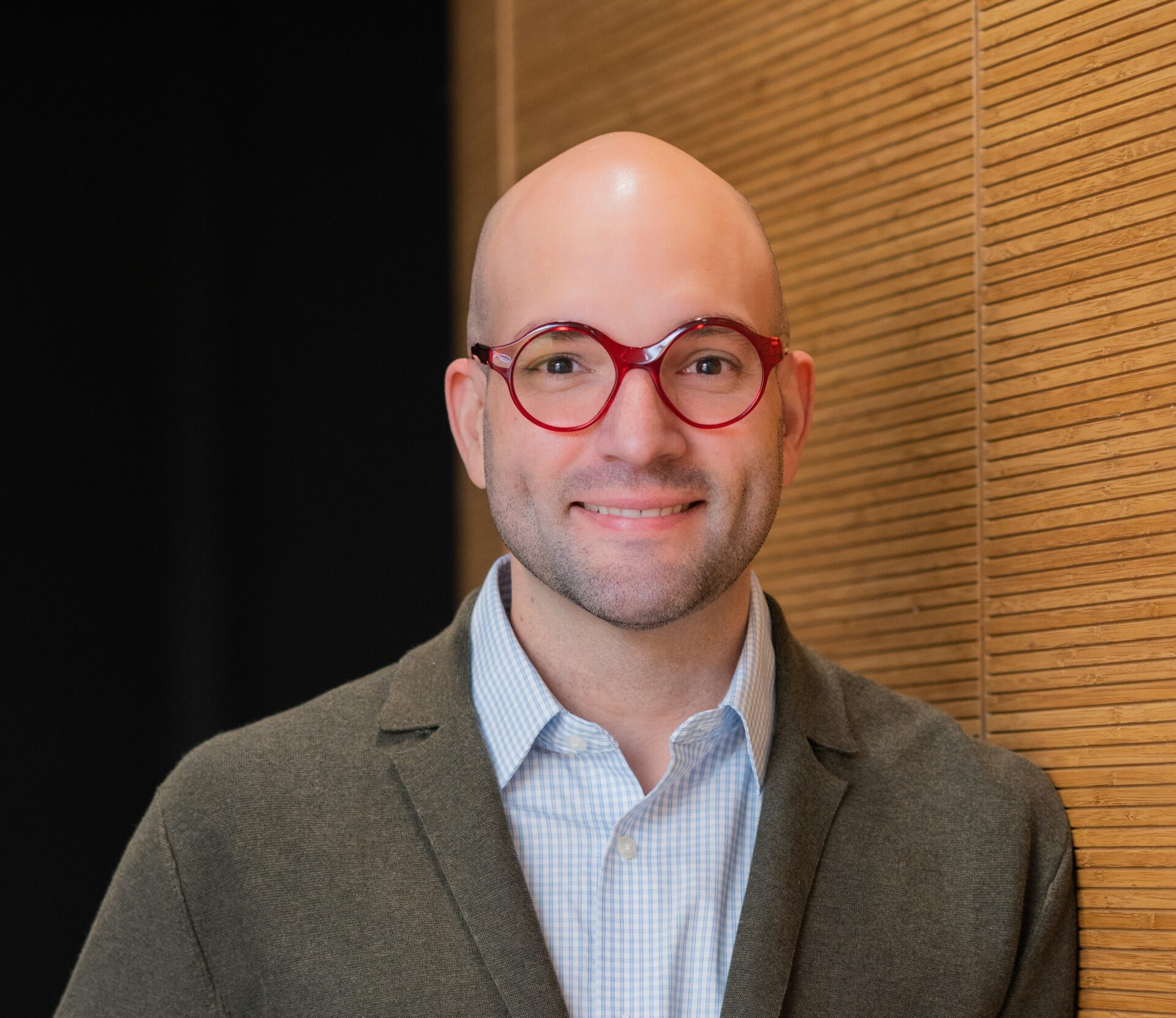
Noah Mancuso is a PhD candidate and Laney Graduate School Fellow at the Rollins School of Public Health at Emory University. Mancuso is the founder of the Queer Health Collaborative (QHC), a health consulting company focused on improving the quality of healthcare for LGBTQ+ individuals through inclusion in research. His latest study, published in Preventive Medicine Reports, examines how geographic drive times to PrEP services has changed across the United States between 2017 and 2025.
The South showed the largest reduction in drive times to PrEP services since 2017 — which might surprise some people given the region’s historic gaps in HIV prevention. And yet AIDSVu data shows the South still has the lowest PrEP-to-Need Ratio* of any U.S. region in 2025, meaning it has the greatest unmet need. What does that disconnect tell us about the relationship between geographic access and actual PrEP uptake?
Even though the South had the largest relative reduction in drive time since 2017, it started with the highest drive times, which means it had the furthest to go. Right now, the South is only just getting even with other regions like the West and Midwest, and its drive times are still roughly double those of the Northeast. There are still clear regional disparities.
Even though we’ve seen improvements in physical and geographic access to care, several other barriers to PrEP uptake remain — including limited HIV knowledge, stigma, discrimination, insurance coverage, and cost. Those barriers are not addressed simply by reducing drive time to care. We need a more holistic approach that tackles them in order to see these improvements translate into increased PrEP uptake.
Your study defines a PrEP desert as a county where the drive time exceeds 30 minutes — and in 2025, half of U.S. counties meet that threshold. How did you land on 30 minutes as the cutoff, and does that number feel different when we’re talking about a one-way trip someone may need to make repeatedly?
That 30-minute travel-time cutoff is used frequently in these kinds of access analyses. It was originally derived in the early 2000s by the U.S. government for the military insurance program now known as TRICARE, where it represented the acceptable limit for drive times to the nearest primary care provider. It has largely remained the standard for an acceptable drive time to care ever since, although there hasn’t been much recent research on whether that threshold is still appropriate for the general population.
Personally, I agree that a 30-minute one-way trip means an hour spent traveling to and from care, which is probably not acceptable for most people — especially those who have to take time away from work, school, or family. We also know that many people who are vulnerable to HIV are more likely to be without a car and to rely on public transportation, so that threshold may not hold up even in urban areas where transit access is limited.
This is actually part of my PhD dissertation, where I’m trying to quantify what acceptable travel-time thresholds currently are in the U.S. for different types of healthcare services, including PrEP, and how they vary by population and mode of transportation. The hope is that once we better understand those thresholds, we can map access more realistically and identify areas where new clinics or other interventions could improve access to care.
Does your data suggest that expanding pharmacy-based PrEP delivery – meaning making PrEP services available through pharmacies, including counseling, prescriptions or refills, and connections to testing or ongoing care – could meaningfully improve geographic access to PrEP in rural areas, and where would this approach likely have the greatest impact?
Yes. Pharmacies are a great option because they are much more geographically distributed than the specialized clinics that typically provide PrEP. Roughly 95% of Americans live within 5 miles of a pharmacy, and pharmacy hours often extend beyond typical clinic hours, including weekends.
Several analyses have shown that states that have passed legislation expanding PrEP delivery through pharmacies have seen significantly higher PrEP use after those laws were implemented. The effect of these state-level laws adds approximately 25 PrEP users per 100,000 people, equivalent to about a 15% increase over the current PrEP use rate. That’s a substantial impact.
States like California, Colorado, Maine, Virginia, and Illinois have already adopted these policies. There is a lot of potential to improve access, especially in rural areas where there are few specialized clinics or other providers offering PrEP.
Rural counties still face drive times to PrEP services that are 5 to 8 times longer than within metro counties, and that gap didn’t narrow between 2017 and 2025. What would it actually take to close it?
To close those gaps, integrating HIV prevention into existing service-delivery models, such as pharmacies, is one promising solution. Other approaches include expanding the Affordable Care Act to increase funding for additional PrEP services and implementing a more coordinated expansion of telemedicine and mobile health options for PrEP.
Some of the newer long-acting PrEP options, such as injectable medications, also reduce how often people need to travel for care, which may help ease some of the burden in rural counties. That said, those injectables still require in-person administration by a healthcare professional, so they don’t completely solve the problem.
Your study documents real improvement since 2017, much of it during a period of expanded federal investment. Given the current federal funding environment, what risks do you see to sustaining those gains?
We’ve already seen many HIV clinic closures across the U.S. over the past year, which greatly affects our ability to keep improving PrEP access. One especially important concern is that community-based organizations have been hit the hardest, because they rely at least in part on federal funding. These organizations also contribute disproportionately to PrEP access and coverage among marginalized populations. When those clinics close, the people losing access are often those most vulnerable to HIV — putting much of our recent progress in reducing HIV incidence at risk.
A recent study found that just a 3% reduction in PrEP coverage could result in approximately 8,000 preventable HIV infections and increase lifetime medical care costs by $3.6 billion.
I’m currently working with colleagues at Emory to quantify what these federal funding changes mean at the local level as they continue to unfold. Our hope is to help other funders and programs better target their efforts and prevent these situations from getting worse. Overall, it’s not a particularly promising picture right now, but we have to keep doing the work and hope we can still make progress.