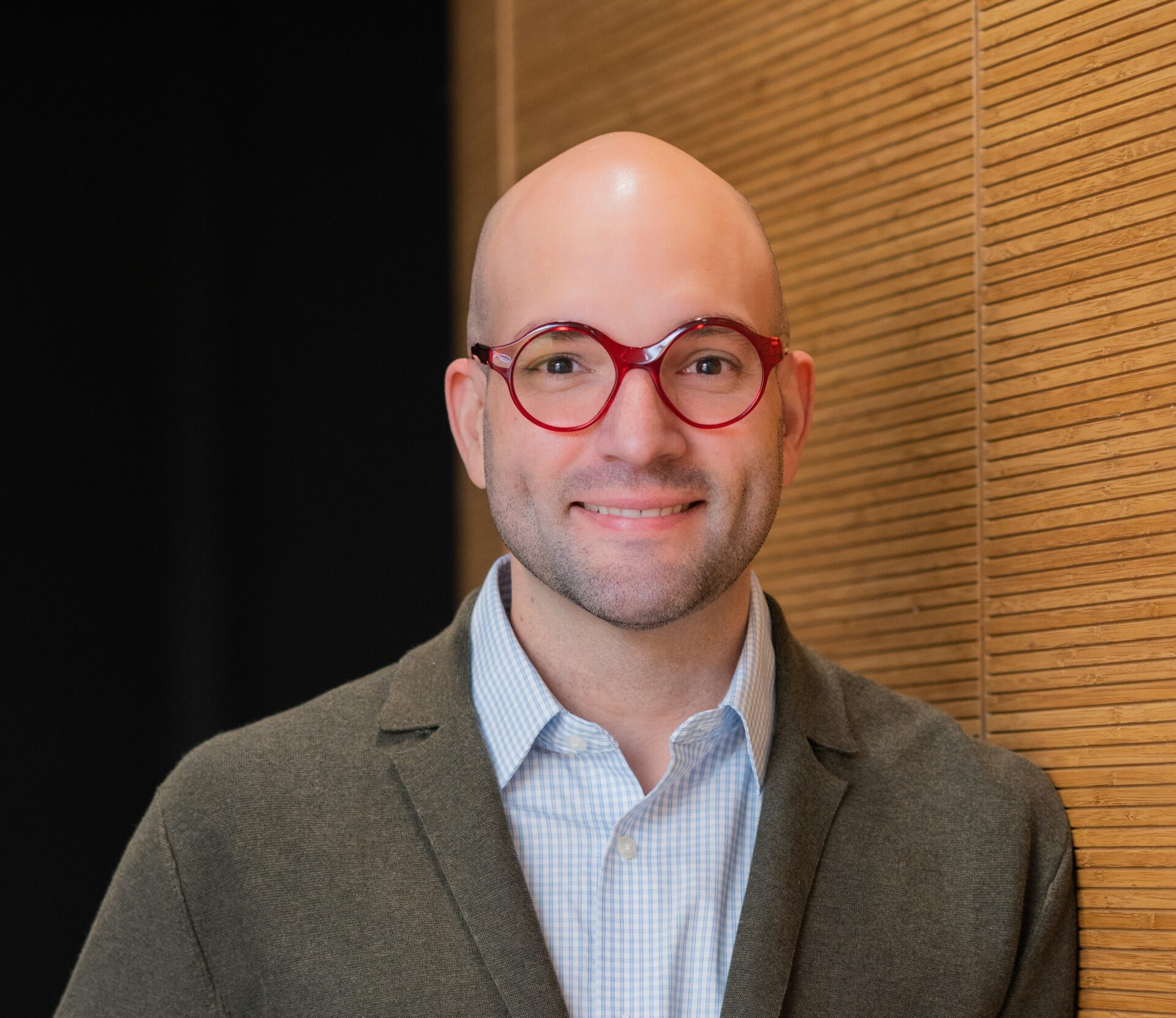
Danielle Houston, MSPH, is the Executive Director of the Southern AIDS Coalition (SAC), the organization that founded Southern HIV/AIDS Awareness Day (SHAAD) in 2019. Appointed in February 2026, Houston brings close to two decades of experience in HIV prevention, treatment, and health equity across the South. She has held leadership roles at Gilead Sciences and at NMAC, where she launched the National HIV PrEP Summit and led Southern-focused initiatives to expand prevention and treatment capacity. Her work centers on translating science into practice — connecting research and data to the communities and programs that put them to use. As Executive Director, Houston is focused on strengthening regional partnerships, advancing policy and structural change, and building the organizational capacity to sustain Southern-led solutions.
Q: You’ve called yourself a bridge — connecting data with communities and science with strategy. What does that bridge-building look like at SAC, and what did your previous roles teach you about what the South needs from a backbone organization?
When I think about who I am in this movement, I always come back to the bridge metaphor. I bridge science and community, data and storytelling, strategy and culture, systems and humanity. My career has taken me to multiple sectors of the HIV response, and what I’ve learned is that each holds an important piece of the solution, but those pieces are rarely connected.
Having strong data, effective interventions, committed organizations, and passionate advocates isn’t enough if we can’t move that knowledge into practice. That’s what bridge-building means to me. It’s about closing the gap between the efficacy of a medication and seeing new diagnoses in Miami become a rare occurrence. It’s making sure the everyday experiences of rural residents with HIV and caregivers in Kentucky are informing the policies, programs, and decisions that affect their lives.
Southern communities have their own ideas and expertise. What we need is stronger infrastructure around Southern-led solutions. That is the role I see for SAC: an organization that can connect people across states and sectors, amplify what communities are saying, identify shared priorities, mobilize around them, and help turn best practices into coordinated action.
SAC can help create the connective tissue for the Southern HIV response. If advocates in Alabama, a provider in Dallas, the Louisiana Department of Health, and a DC partner are confronting different parts of the same problem, SAC should help them see those connections and build the relationships and strategy needed to move together and achieve impact at scale.
Q: Black Southerners made up 48% of new diagnoses in the South but only 24% of Southern PrEP users; Hispanic/Latino Southerners, 28% and 19%. What would actually close these gaps, and what’s been tried that hasn’t worked?
What has not worked is treating these disparities primarily as a knowledge gap. Awareness matters, and we know PrEP awareness is not equal across communities. But, awareness alone cannot explain disparities of this magnitude. Black and Latine Southerners are more likely to encounter healthcare systems that have not consistently earned trust, reflected their needs, or made prevention easy to access.
We must move beyond prevention messaging that treats HIV vulnerability as a function of individual behavior. We cannot expect individual behavior change to overcome structural vulnerabilities. For many Black and Latine Southerners, whether they acquire HIV is shaped by compounding systems — access to healthcare, geography, poverty, stigma, racism, immigration concerns, housing, insurance, and policy. While we’re unable to dismantle every structural barrier overnight, we can make sure Black and Latine Southerners know they have effective options to prevent HIV today.
At the same time, PrEP is still treated too much like specialty care. PrEP should be a routine part of primary, sexual, and reproductive healthcare and fit people’s actual lives, prevention goals, and sexual realities. That means wellness-focused, low-barrier access through approaches such as same-day starts, telehealth, pharmacist prescribing where state law allows it, and stronger community-to-clinic infrastructure. PrEP cannot remain in specialized settings if we expect it to have population-level impact.
We also must pay attention to what happens after someone decides they want PrEP. How many steps stand between that decision and receiving care? Can they maintain access for as long as PrEP is right for them? The next gains will come from reimagining how prevention is delivered, not simply refining the current models.
Q: SAC founded SHAAD in 2019 to make sure the South wasn’t an afterthought in the national HIV conversation. At the time, the region accounted for roughly 52% of new diagnoses while making up 38% of the U.S. population; in 2024, it was 51% and 39%. What’s been built over those seven years that you think will last, and what does that tell us about where the response still needs to go?
Those numbers reinforce why SHAAD is still necessary. The South’s share of national diagnoses tells us that the epidemic remains disproportionately concentrated here. It doesn’t tell the full story of the progress made within the region over the last seven years.
SHAAD was created to make sure the South could not be treated as an afterthought in the national HIV response. Today, it is impossible to talk seriously about ending the U.S. HIV epidemic without talking about the South and its specific needs.
Over the last seven years, we have strengthened networks among advocates, community organizations, health departments, providers, researchers, funders, and national partners. We have grantmaking relationships that helped strengthen organizations that are now anchors in their cities. We have more advocates who routinely and effectively engage their legislators. We have better data, improved prevention and treatment models, and more Southern leaders influencing national conversations.
But visibility and stronger coalitions are not the same thing as outcomes. The next chapter needs to translate what we have built into measurable change: fewer new diagnoses, greater PrEP uptake, stronger engagement in care, and policies and systems that make those outcomes possible.
Measurable change requires us to think beyond HIV programs alone. Coverage, workforce, technology, healthcare access, media, and state policy all shape whether people can benefit from HIV prevention and treatment. For me, that is the promise of the next chapter: not simply making sure the South is seen, but making sure the South has the collective power and coordination to change its trajectory.
Q: 20% of new diagnoses in the South are among people aged 13–24, compared with 13% in the West — and this is a generation with more prevention options than any before it. What gives you hope about how young Southerners are engaging with this work, and how is SAC investing in that next generation of leadership?
What gives me hope is that young Southerners are more willing to talk openly about sex, testing, mental health, identity, and healthcare in ways that challenge many of the stigmas that restricted previous generations. Youth and young adults are also less likely to define community by geography, which is critical in a region where like-minded advocates and allies may be separated by hundreds of miles.
There is an important tension that we have to acknowledge. Young people have more HIV prevention and treatment options, greater access to information, and in many ways more freedom to define their identities, relationships, and sexual health on their own terms. At the same time, many are navigating a world in which reproductive autonomy and access to voting have been significantly restricted, especially across the South. This matters in HIV. We cannot talk about young people’s health without also talking about their ability to make decisions about their bodies, access healthcare confidentially, participate in civic life, and influence the policies governing their communities.
Young people are not simply the leaders of tomorrow; they are leaders now. They are entering this work with different expectations about respectability, community, autonomy, and who gets to have power. Our responsibility is not to preserve the HIV movement exactly as we built it, but to create room for them to reshape it and exercise real power within it.
For SAC, that means leadership development that puts young advocates in direct contact with policymakers, creates intergenerational spaces where they can lead conversations and shape agendas, and builds a coalition model that lowers barriers to participation and responds to their priorities.
Q: This is your first SHAAD leading SAC — what are you hoping this year’s SHAAD accomplishes this year?
I want this to be the year SHAAD stops functioning only as an observance and starts functioning as a checkpoint.
Our 2026 theme, Collective Action for Collective Impact, reflects the need to work together to achieve monumental progress toward ending new HIV diagnoses in the South. It is a call for a common agenda: a shared understanding of the problems, shared goals, shared measurement, and a willingness to hold each other accountable for what we accomplish from one August to the next.
For SAC, that means building a coalition with deep reach and meaningful connections across all 16 Southern states and DC. We want many more advocates, providers, community organizations, public health leaders, policymakers, researchers, and partners to see themselves as part of a larger Southern response.
SAC’s commitment is to keep the South informed, connected, and ready to act. As a convener for action, we want people who attend our SHAAD reception, Saving Ourselves Symposium (SOS), and Southern Policymaker Academy (SPA) to leave with concrete commitments, ownership, and urgency.
On SHAAD and every day in between, SAC is strengthening a Southern movement more capable of changing systems, influencing policy, directing resources where they are needed most, and producing measurable improvements in people’s lives across the South.