Today, AIDSVu released its annual update of interactive maps and data visualizations, highlighting the latest national, state, and local insights into the HIV epidemic. The 2024 HIV surveillance data updates include state- and county-level figures on new diagnoses, prevalence, mortality, and care outcomes, offering essential tools for policymakers, researchers, and community leaders committed to ending the HIV epidemic in the U.S.
This year’s data show measurable progress. New HIV diagnoses declined for a second consecutive year, every stage of the care continuum—linkage to care, receipt of care, and viral suppression—improved over 2023, and PrEP use reached a record high. But the same data show how unevenly that progress is shared: Black and Hispanic/Latino communities, the South, and young people continue to carry a disproportionate share of the epidemic, and the gap between HIV prevention need and PrEP use remains widest exactly where the burden is greatest.
“The 2024 data tell us two things at once. More people are in care, more people are virally suppressed, and PrEP use has never been higher — that’s what a working care and prevention system produces. But the communities with the least access to prevention are still the ones carrying the heaviest burden, and that gap hasn’t closed,” said Dr. Patrick Sullivan, Professor of Epidemiology at Emory University’s Rollins School of Public Health and Principal Scientist for AIDSVu.
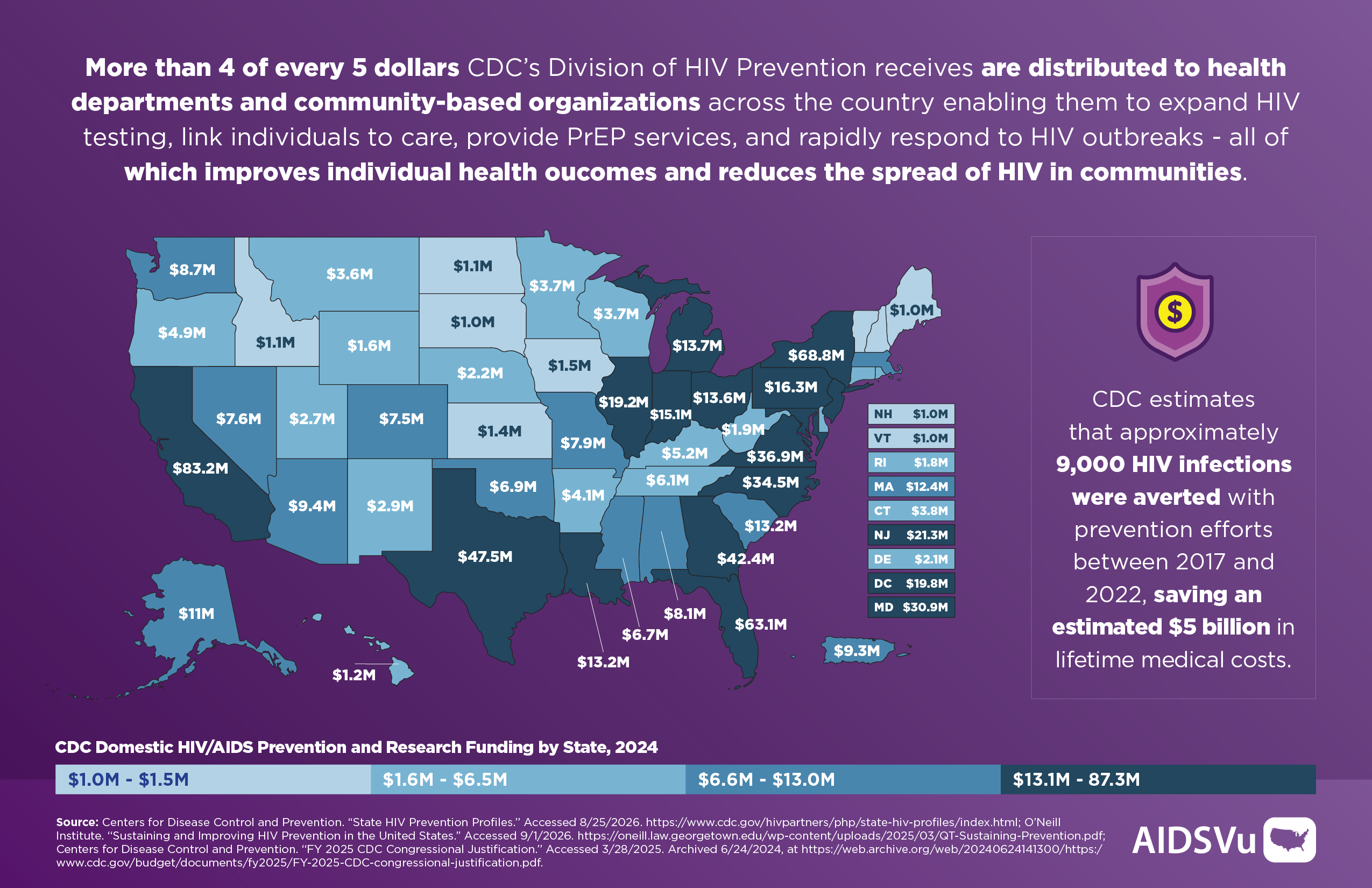
Sustained state and federal funding for HIV surveillance, prevention, treatment, and care is what makes this progress possible and measurable. Over 80% of the CDC’s HIV prevention funding supports state and local health departments—forming the backbone of the nation’s response to HIV. Investments in surveillance ensure timely and accurate data to track the epidemic and guide resources where they are most needed, while funding for HIV treatment and care supports linkage to care, retention in care, and viral suppression—all essential to ending the epidemic. Robust evidence shows that greater PrEP use leads to fewer new HIV diagnoses and lowers long-term healthcare costs. Yet, over the past year, the federal HIV prevention infrastructure that produces these gains has come under sustained pressure from both proposed budget reductions and administrative action.
“The HIV epidemic progress is incremental, fragile, and it is not shared equally. The communities where prevention is least available are the same ones where the burden is highest. Dismantling the local infrastructure that delivers testing, PrEP, and linkage to care will risk the nation losing ground, widening inequities, and undermining decades of progress toward ending the HIV epidemic,” continued Sullivan.
Key Findings from the 2024 Data Update
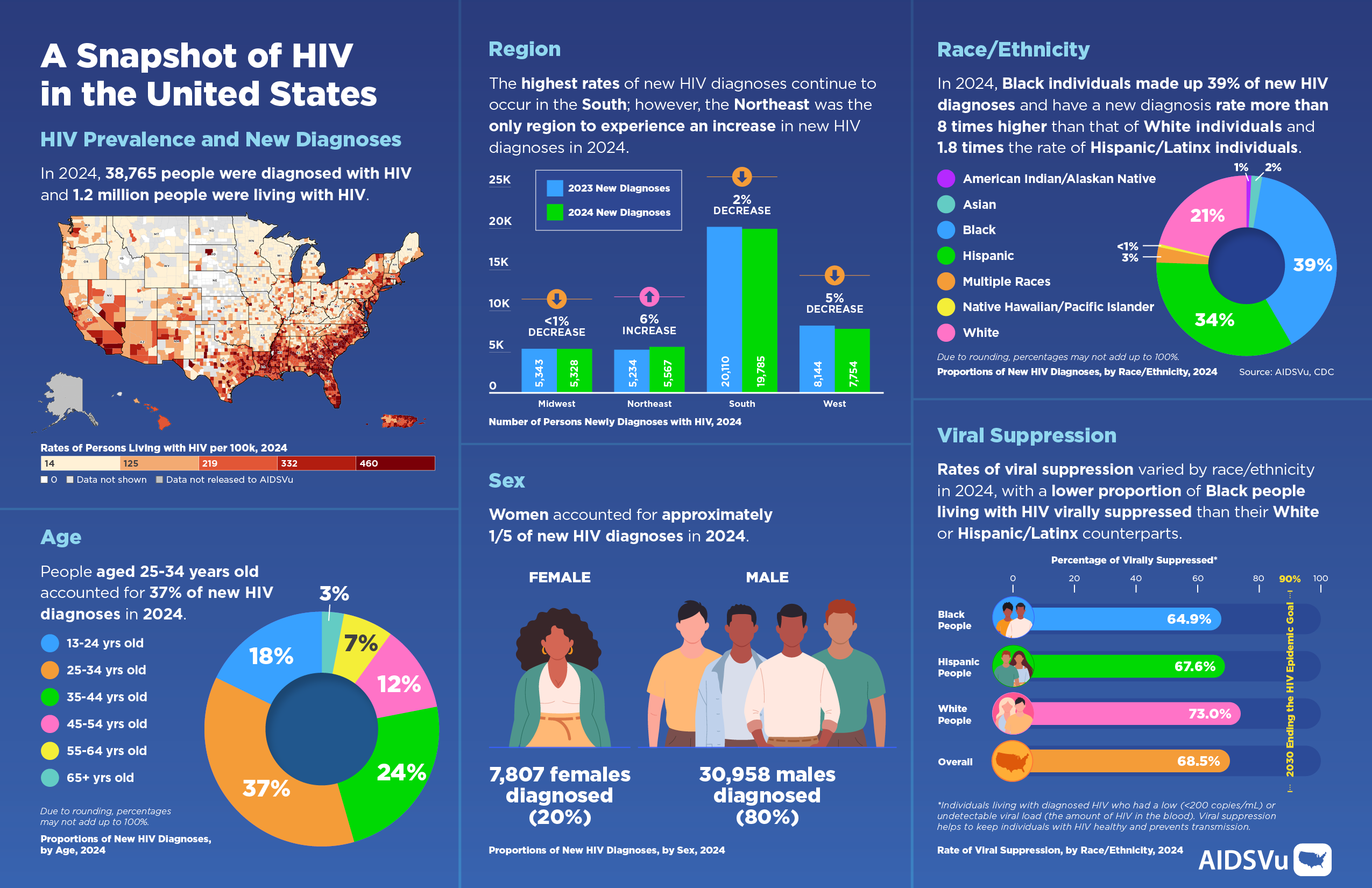
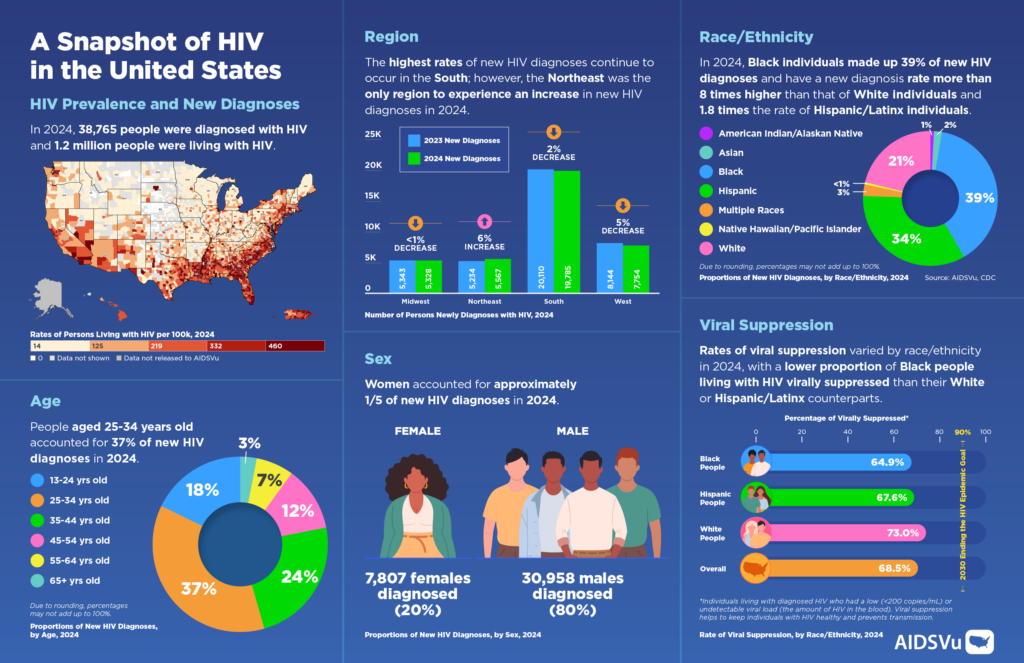
- In 2024, nearly 1.2 million people were living with HIV in the U.S. (1,157,995), with those aged 55–64 comprising the largest affected group (26%).
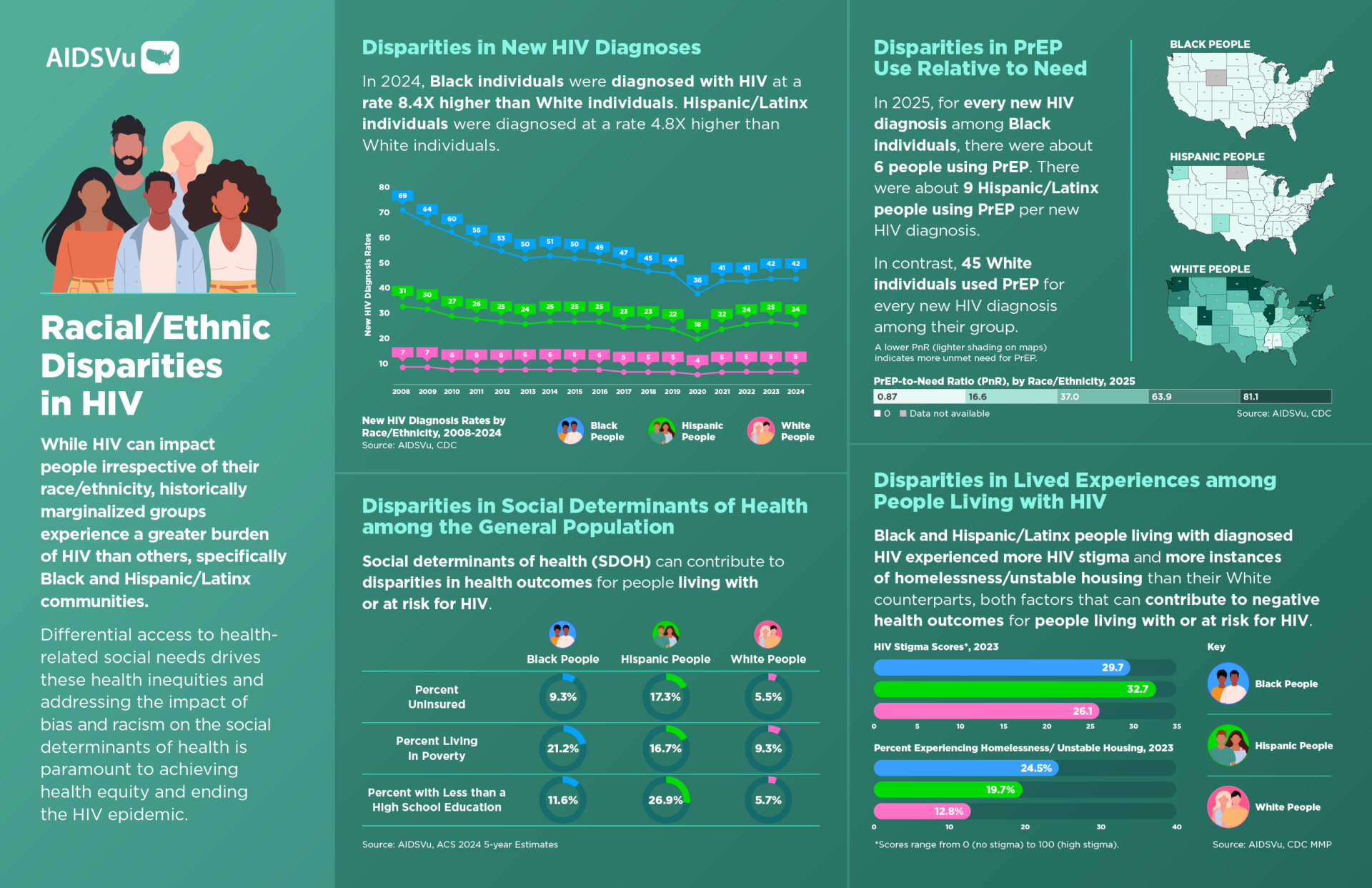
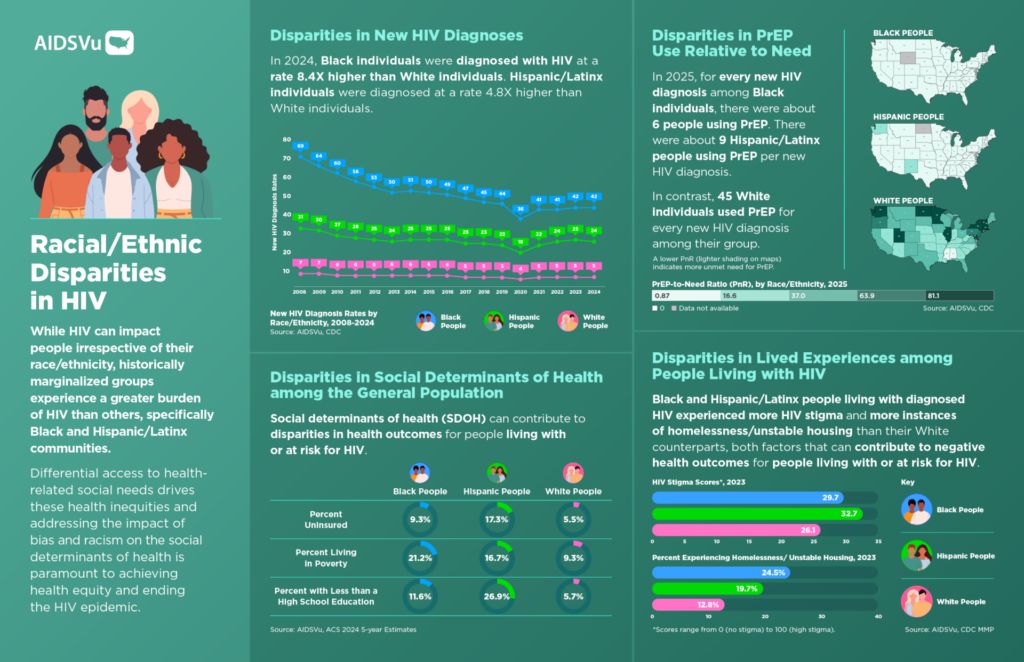
- Racial disparities endured in 2024: Black individuals represented 39% of those living with HIV, despite comprising just 12% of the U.S. population. The HIV prevalence rate for Black individuals (1,245 people with HIV per 100,000 population) was 7× higher than that for White individuals (179 per 100,000), and more than 3× higher for Hispanic/Latino individuals (582 per 100,000) than for White individuals.
- In 2024, there were 38,765 new HIV diagnoses, marking an 18% decline since 2008 and a 1% decrease from 2023. Yet disparities persist—Black individuals accounted for 39% of new diagnoses, facing rates more than 8× higher than White individuals (42 vs. 5 new HIV diagnoses per 100,000 population). Hispanic/Latino individuals faced rates nearly 5× higher (24 per 100,000).
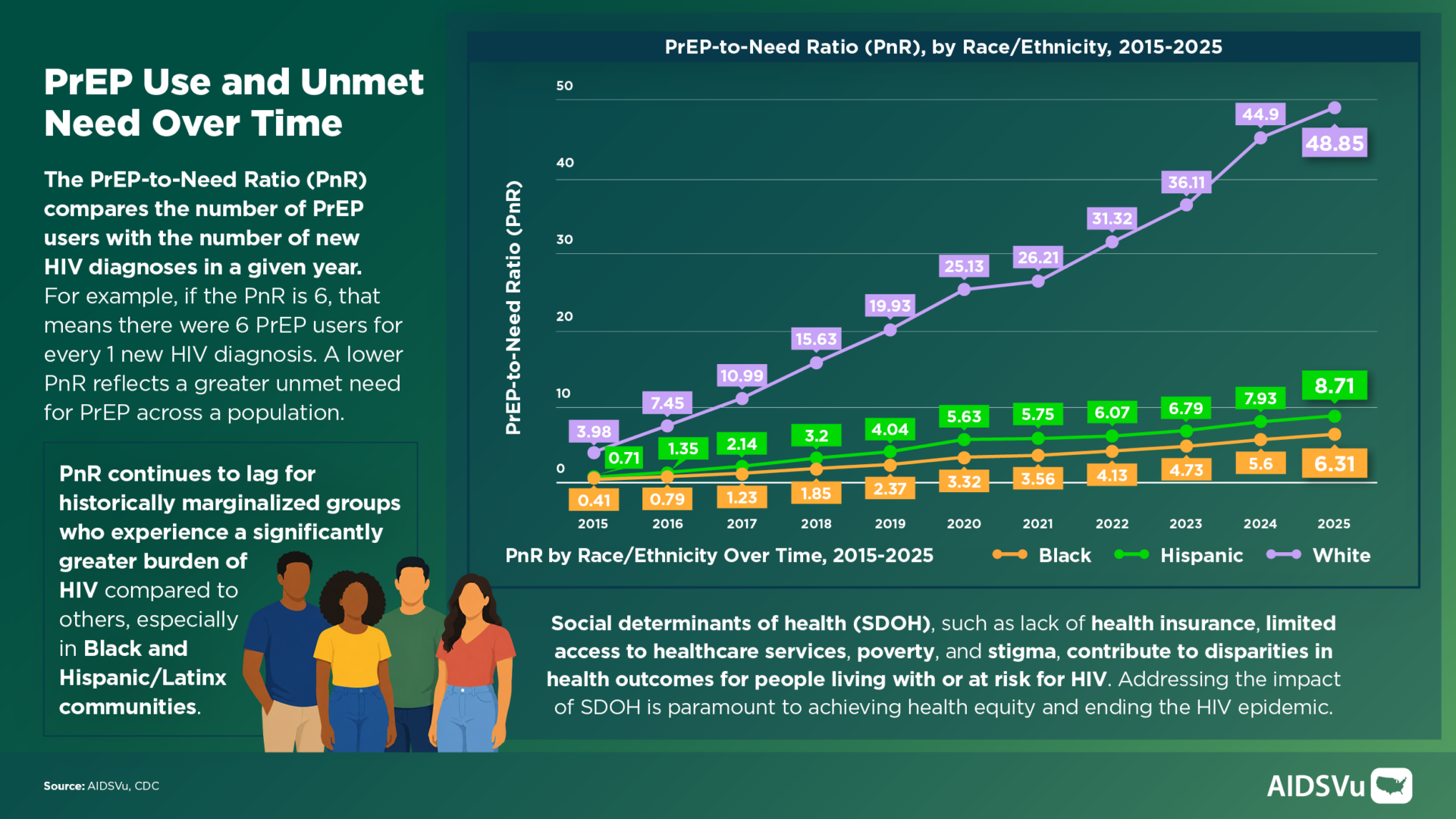
- The PrEP-to-Need Ratio (PnR) rose to 6 in 2025, up 67% since 2021 (9.9), indicating that there were nearly 17 PrEP users for every new HIV diagnosis—a record high. Still, in 2025, White individuals’ PnR (48.9) was nearly 8× higher than that of Black individuals (6.3) and more than 5× higher than that of Hispanic/Latino individuals (8.7). A lower PnR indicates more unmet need for PrEP.
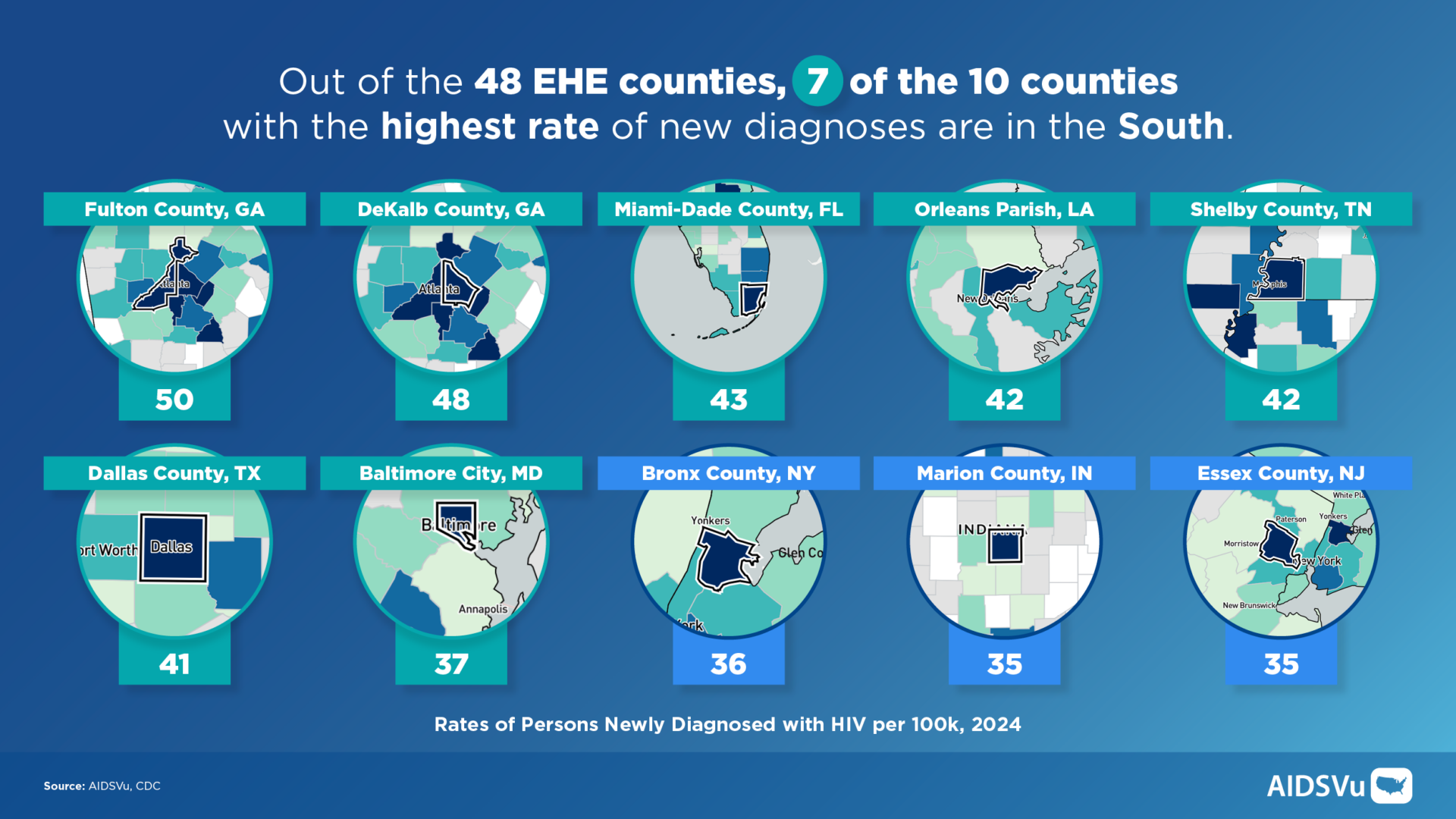
- In 2024, the South accounted for 51% of all new HIV diagnoses and 47% of all people living with HIV, representing the region with the greatest HIV burden. Nine of the 11 states with the highest new diagnosis rates are in the South, as are 7 of the 10 Ending the HIV Epidemic (EHE) counties with the highest new diagnosis rates.
- The Northeast was the only region to see an increase in new HIV diagnoses between 2023 and 2024 (a 6% rise), even as it recorded the largest long-term decline of any region since 2008 (37%). The Northeast also shows the widest racial disparity in the country, with a new diagnosis rate among Black individuals 13× that of White individuals.
AIDSVu’s Recent Updates:
Earlier this summer, AIDSVu published updated PrEP data for 2025, showing record-high PrEP use alongside persistent gaps in HIV prevention access and uptake, and continued to update PrEPVu.org, a PrEP equity platform dedicated to shedding light on PrEP disparities by race/ethnicity, sex/gender, and age, with details on access and stigma. The available PrEP data on AIDSVu and PrEPVu can help bring attention to PrEP trends across the U.S. and inform policies to increase PrEP access and awareness in underserved communities.
About AIDSVu’s Annual Data Update:
AIDSVu is presented by Emory University’s Rollins School of Public Health in partnership with Gilead Sciences, Inc. and the Center for AIDS Research at Emory University (CFAR). Now in its sixteenth year, AIDSVu continues to advance its mission to make HIV data widely available, easily accessible, and locally relevant to inform public health decision-making and action. The site aims to provide researchers, policymakers, and community members with a more comprehensive understanding of the HIV epidemic at the local-, state-, and national-level.
State- and county-level data displayed on AIDSVu were obtained from the Centers for Disease Control and Prevention (CDC) and compiled by researchers at the Rollins School of Public Health. ZIP Code data were provided by state and city health departments and compiled by researchers at the Rollins School of Public Health. To learn more about AIDSVu’s HIV data and sources, see our FAQs and Data Methods.